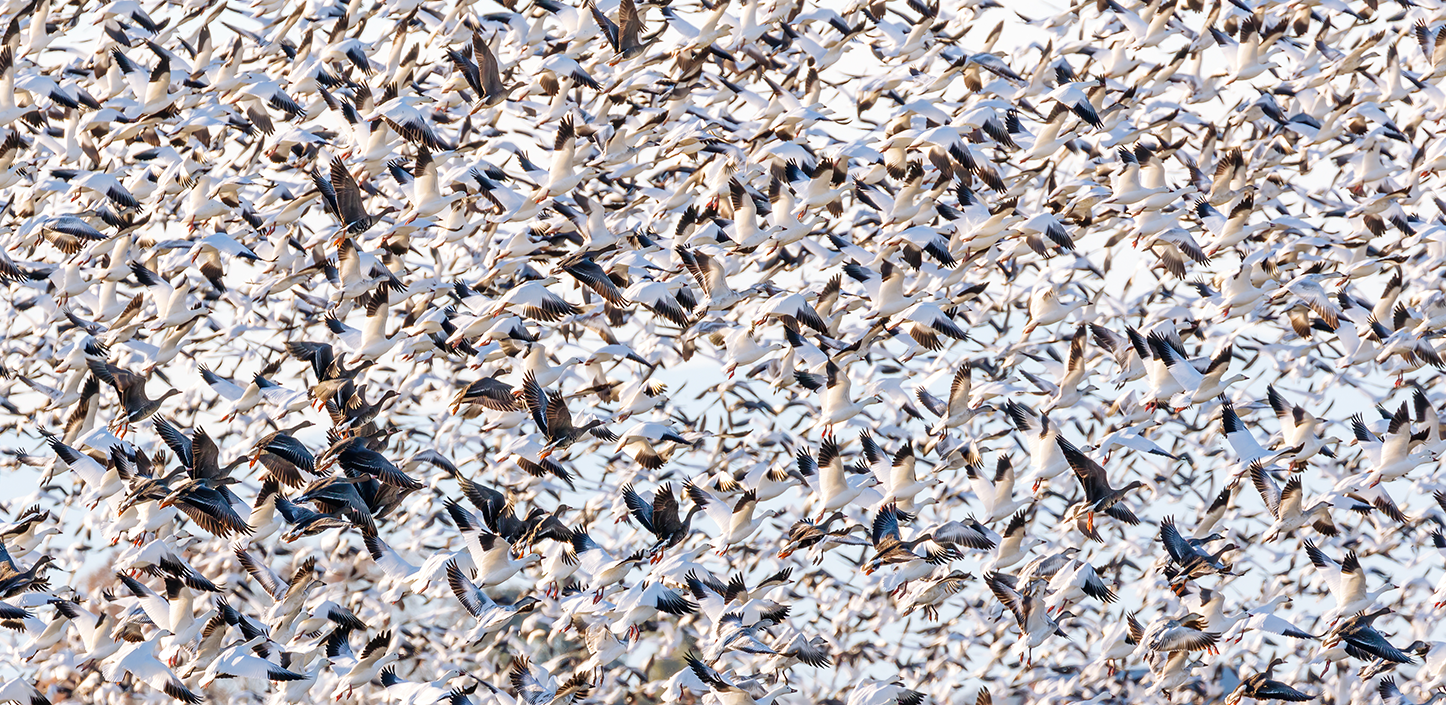
Snow geese in flight over a rice field
Image
Farming the Flyways: How rice farmers are helping to conserve pathways for migratory birds
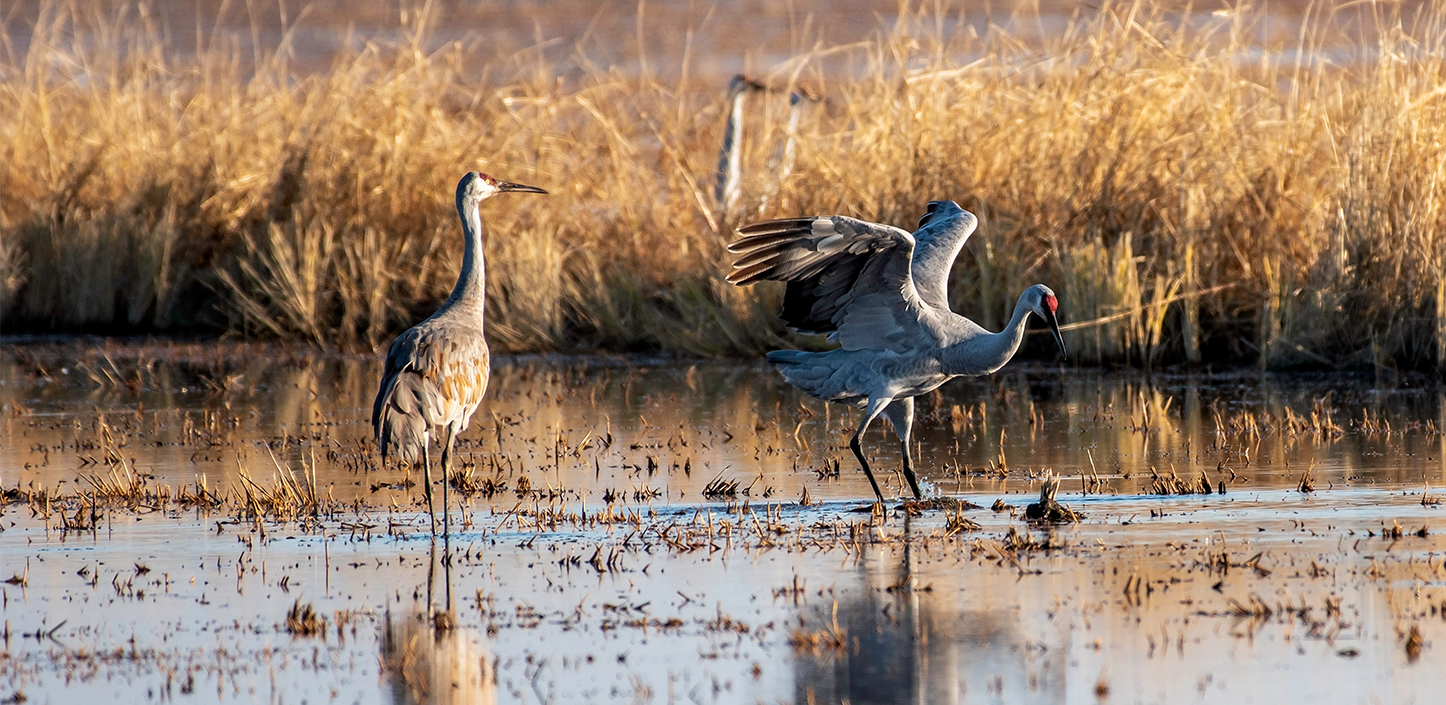
Sandhill cranes in a flooded rice field in California
In recent years, U.S. farmers have planted roughly 2.8 to 3 million acres of rice annually. While rice has a more modest agricultural footprint when compared to crops like corn, wheat or soybeans, in regions like the Mississippi Alluvial Valley, Gulf Coastal Plain, and California’s Central Valley, rice is essential to local economies.
Ask rice farmer Joseph Arcaneaux what makes his property in Cameron Parish, Louisiana, a good environment for growing rice, and his answer is simple: “It’s wet.”
His thousand-acre rice operation is just 14 miles from the Gulf and sits entirely below sea level. It is flat, hot and humid — the exact environment where rice thrives.
It’s also a much-needed habitat for migratory shorebirds and waterfowl. Rice fields act as “surrogate wetlands” for birds and provide the critical ecological functions of historical floodplains and marshes that have been lost to development across the South and West. And rice-producing regions tend to naturally align with major migratory flyways, enabling these fields to offer continuous, reliable pitstops for birds to rest and refuel.
With support from NFWF and USDA’s Natural Resources Conservation Service (NRCS), Arcaneaux has voluntarily implemented conservation practices to transform his rice fields into a vital sanctuary for migrating shorebirds and waterfowl — mimicking the natural seasonal wetlands cycle — all while keeping his agricultural operations intact and productive.
Arcaneaux’s year begins with planting rice, which takes approximately 110 to 120 days to mature. While the rice is still growing in April and May, Arcaneaux “seeds” small, live crawfish into the flooded fields. When the fields are drained for the summer rice harvest, the crawfish burrow deep into the mud to survive the heat and reproduce.
Historically, a farmer might have simply let a harvested rice field drain for the winter. Instead, Arcaneaux closes the “pipes” — the water control structures in the levees — to capture winter rainfall and create shallow ponds. By holding this water from November to January, Arcaneaux is providing a much-needed habitat for birds during the colder winter months.
The result is a boon for the birds. Migratory birds expend a massive amount of energy during their journeys. A flooded, harvested rice field is highly productive, offering the birds two crucial food sources. Rice left behind after a harvest provides the carbohydrate-rich fuel waterfowl and migratory birds need to build essential fat reserves. Additionally, the decomposing rice straw fuels a boom in aquatic invertebrates, including crustaceans like crawfish. This provides the vital protein that the birds need to prepare for the spring breeding season.
Arcaneaux’s efforts don’t just support bird populations; they sustain local communities and producers. For Arcaneaux, keeping the water on his land is a highly practical decision.
“I really haven’t changed anything of the operation, because it’s cheaper just to close the pipes in the winter and hold the water,” he admits. “With more people doing it, I’ve seen more and more waterfowl in the area.”
Good ecology, it turns out, is good business. He doesn’t have to overhaul his business model or buy expensive new equipment to benefit migrating birds and waterfowl. He just has to give nature a hand. It is a win for his wallet, his workload and the birds.
Arcaneaux also takes advantage of the symbiotic relationship between rice farming and duck hunting. Leasing flooded fields to duck hunters provides a lucrative secondary income stream for the farm. Visiting hunters bring a significant economic boost to rural communities, spending money on lodging, food and gear. Private lands also offer a serene experience for hunters and wildlife alike.
“With private lands, there ain’t as much hunting pressure as it would be on public land where anybody could go sit somewhere... or harass the wildlife,” Arcaneaux notes. “Here they have a place to sit and rest.”
This dynamic is equally critical in the Gulf Coastal Plain of Louisiana and Texas. In Texas, the Texas Rice Industry Coalition for the Environment (Texas RICE) has received support through the ConocoPhillips SPIRIT of Conservation Program for projects restoring coastal wetland habitat near key refuges, wildlife management areas and private lands along the Texas coast.
Bill Stransky, executive director of Texas RICE, emphasizes the urgency of this work. During the past 50 years, Texas has seen vast estuaries and coastal prairies converted or damaged by saltwater intrusion.
“We have a really big need to put a lot of shallow water on the landscape to replace all that habitat that’s been damaged or lost completely,” says Stransky. “Farmers want to improve farming and stay farming, and we want to utilize this land to improve it for wildlife habitat.”
The results of these efforts can be seen in the low-laying coastal plain of Texas. Pintails, green-winged teal and shovelers paddling along shallow surfaces. Snow geese kicking up en masse. Bald eagles circling overhead. “I mean, it’s almost biblical, the number of birds,” Stransky marvels. “If the birds are there, [it’s] because there’s good habitat.”
These flooded rice fields also help buffer communities from coastal inundation and proved essential during the Deepwater Horizon oil spill. At that time, NFWF, NRCS and other funding partners quickly deployed resources to assist farmers in retaining water in their Louisiana rice fields during the fall and winter to entice waterfowl to stay on land longer and avoid spill dangers. This investment was extremely successful in saving thousands of waterfowl from almost certain peril.
The third-largest rice-producing region in the U.S. is California’s vast Central Valley, where roughly 500,000 acres of rice are grown annually. Over the past century, almost 95 percent of the Central Valley’s original wetlands have been lost to agriculture and urban development.
In California’s Central Valley, farmers flood hundreds of thousands of acres of harvested rice fields in winter, creating major food and habitat resources for waterfowl and other wildlife. The sheer biodiversity of species that can be found eating and refueling in this landscape is staggering. Studies show that California’s flooded rice fields support well over 100 bird species, in addition to dozens of mammal, reptile, fish and amphibian species.
With a recent grant from NFWF’s Sacramento Valley Floodplain Enhancement for Salmon and Shorebirds Program, the California Rice Commission is working with willing rice farmers to create 2,500 acres of high-quality, seasonal habitat specifically tailored for migratory shorebirds like the long-billed dowitcher and American avocet.
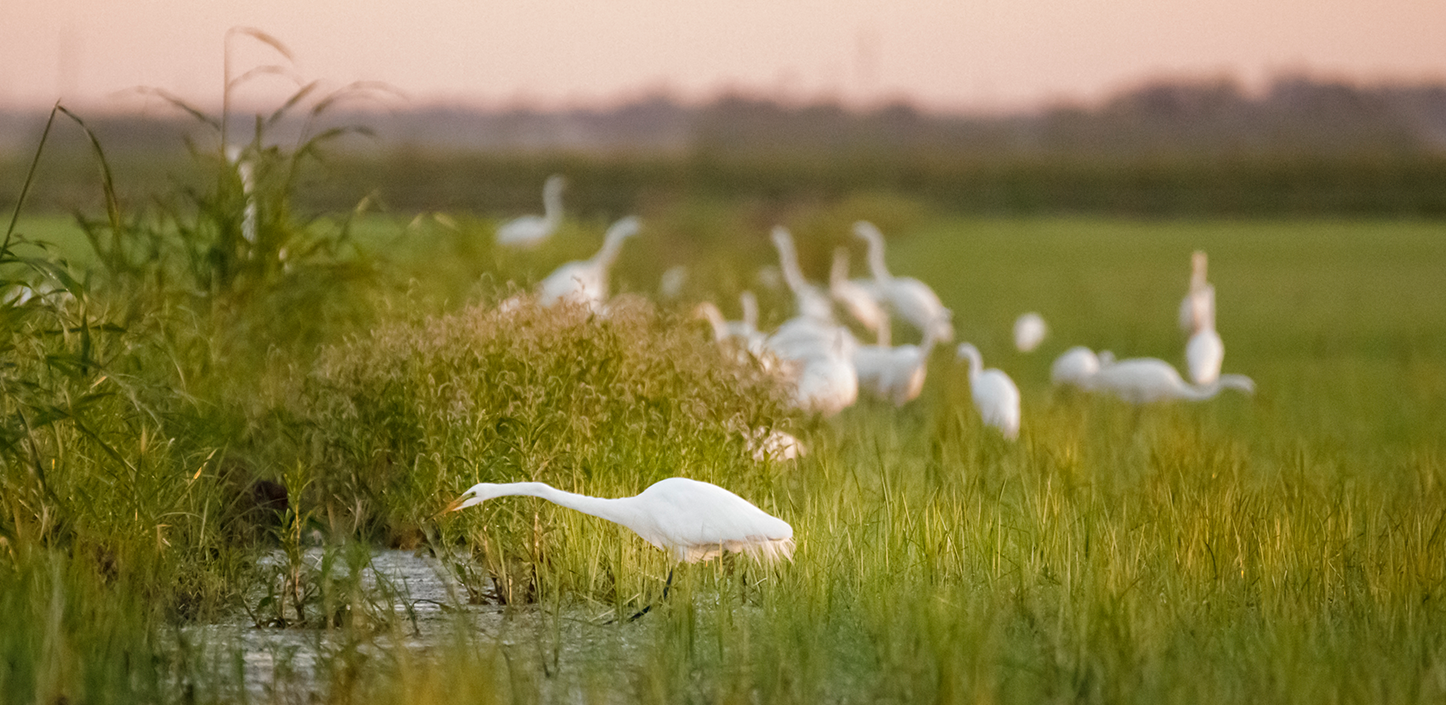
Egrets in a rice field in California
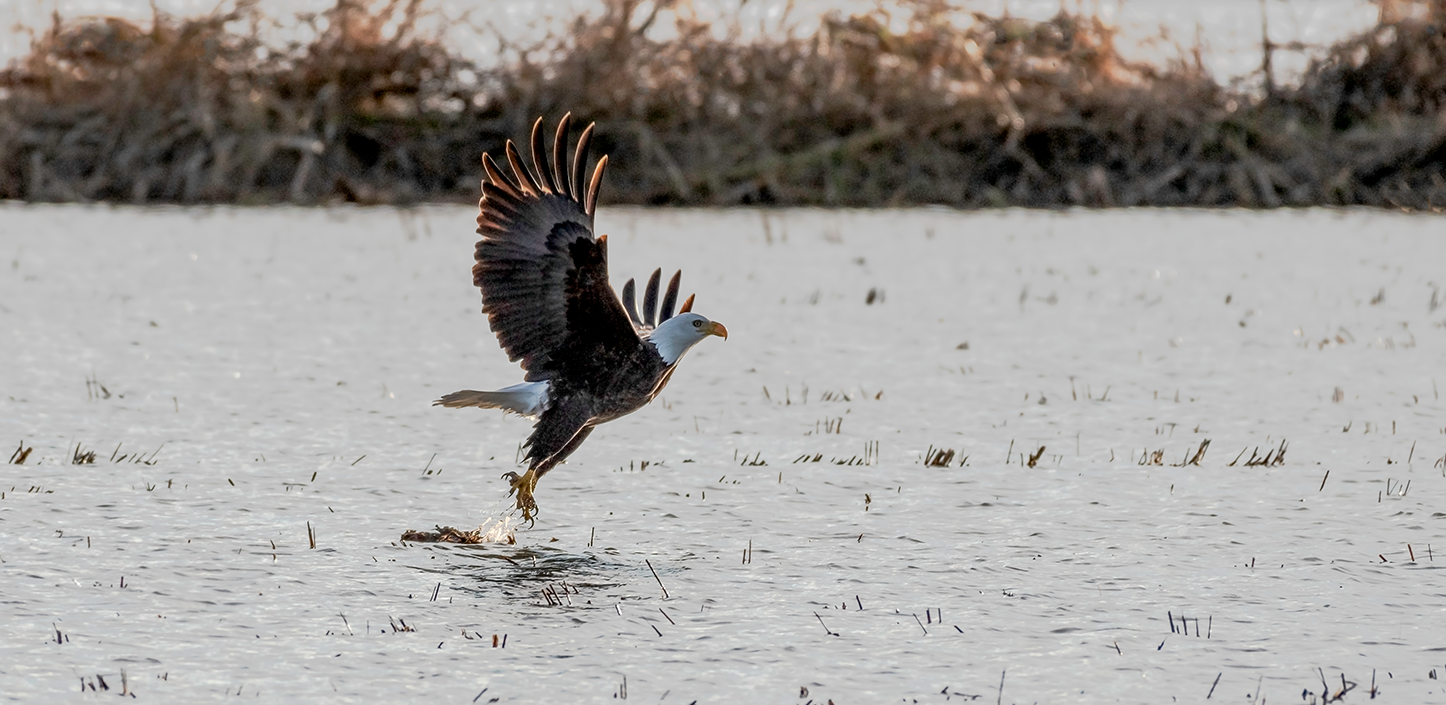
Bald eagle flying over a flooded rice field
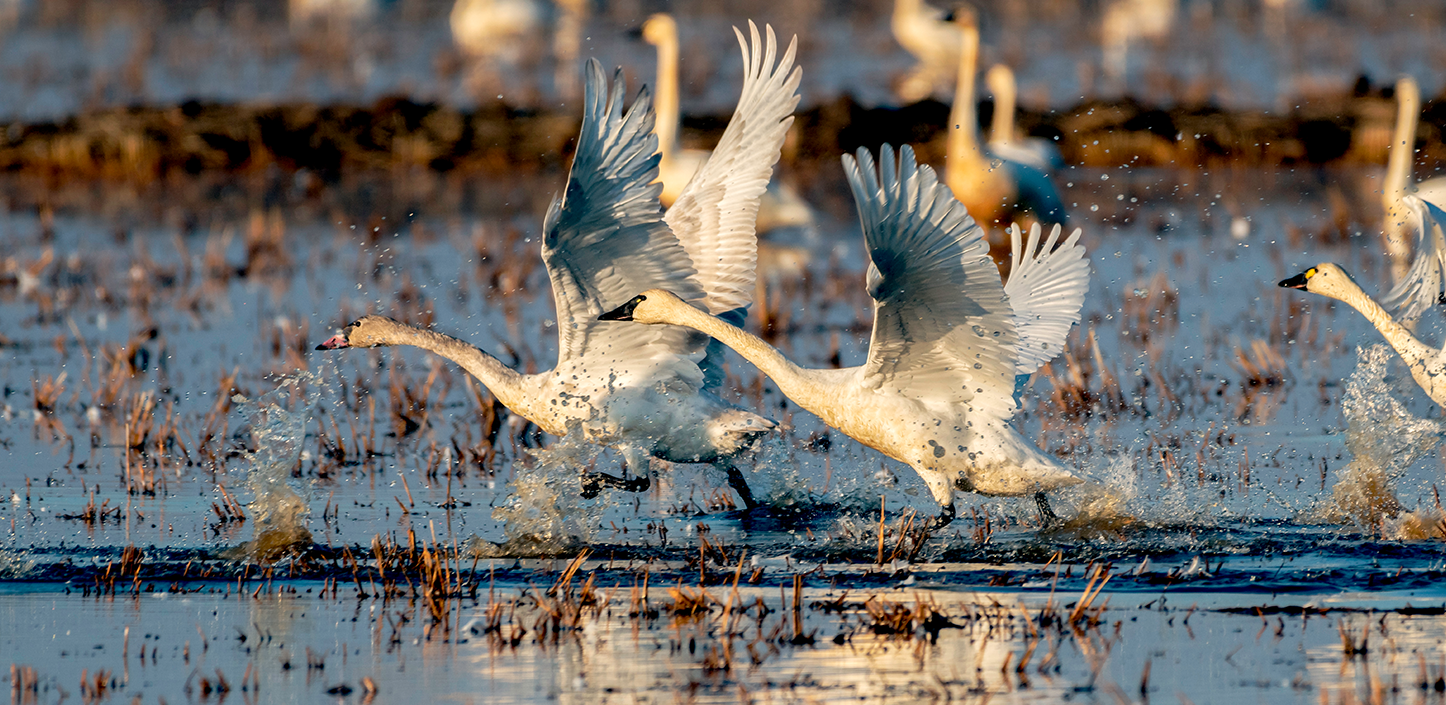
Tundra swans run across a rice field
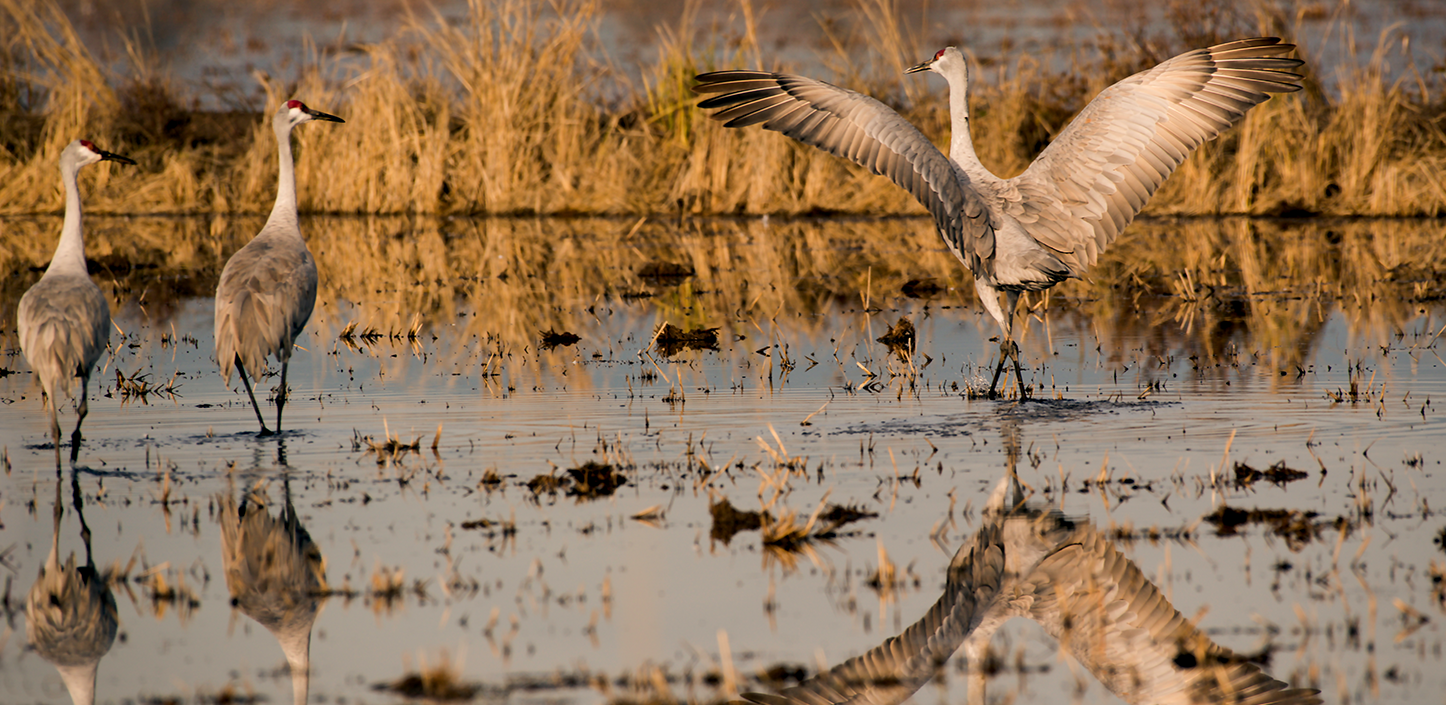
Sandhill cranes in a flooded rice field in California
While the total acreage of rice grown in the United States is relatively small, its ecological and economic footprint is massive. Rice is a stabilizing force for rural economies, supporting farm families, suppliers and local businesses.
When rice farms are lost to development or drought, the loss creates a devastating domino effect. Habitat for millions of birds disappears. Hunting traditions and outdoor recreation wither. Local economies weaken.
But supporting farmers to implement voluntary conservation practices like these also helps farmers reduce costs, improve irrigation efficiency and manage agricultural runoff, all while ensuring sustainable yields.
What is good for the farmer is good for the community. What is good for the community is good for the wildlife. And ultimately, what is good for wildlife is good for the wider ecosystem.
“I'm hoping to be here long enough for my kids to have a place to farm if they want to start,” Arcaneaux reflects, looking out over his flooded fields in Louisiana. “It’s great to feed the world. To be able to know that you’re contributing.”