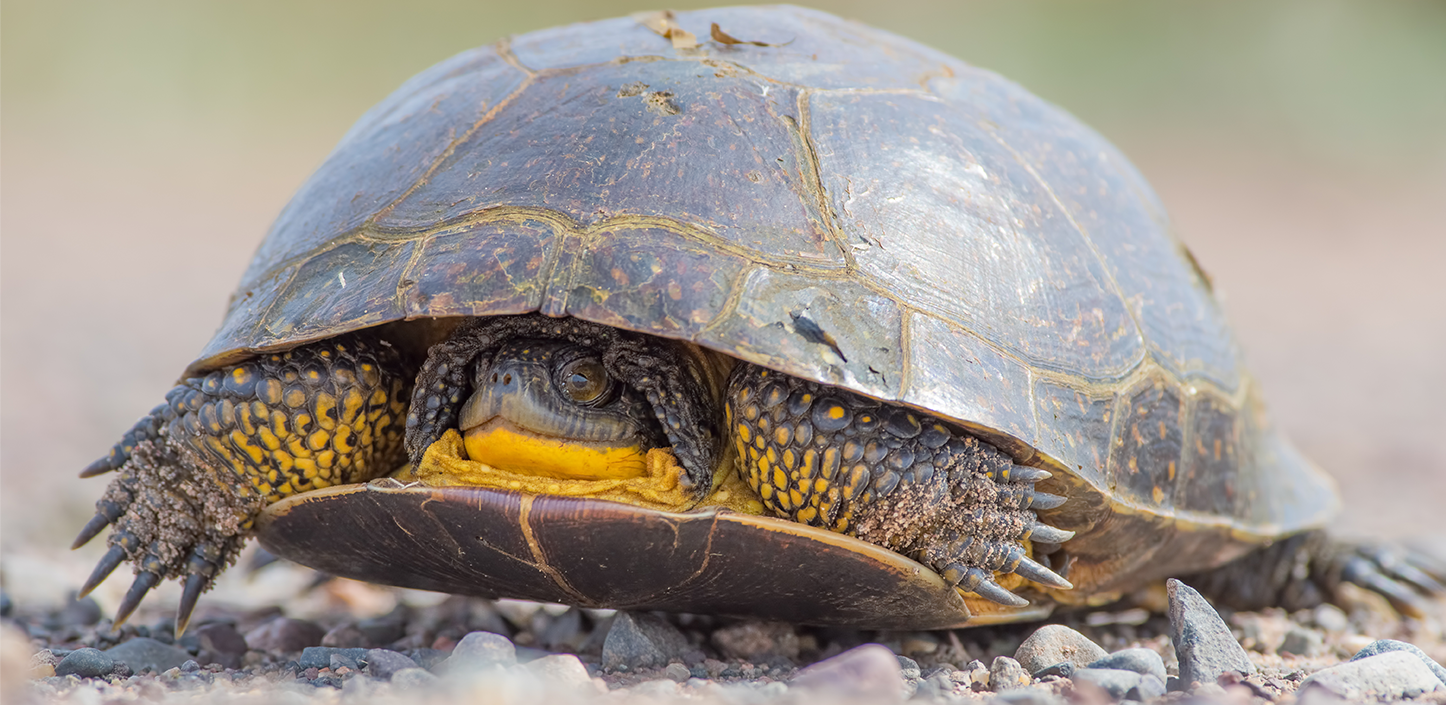
Blanding's turtle
Image
Helping turtles and amphibians cross the road for their “big night”
NFWF grant helps restore habitat connectivity for Blanding’s turtles, spotted turtles and Jefferson salamanders in New Hampshire
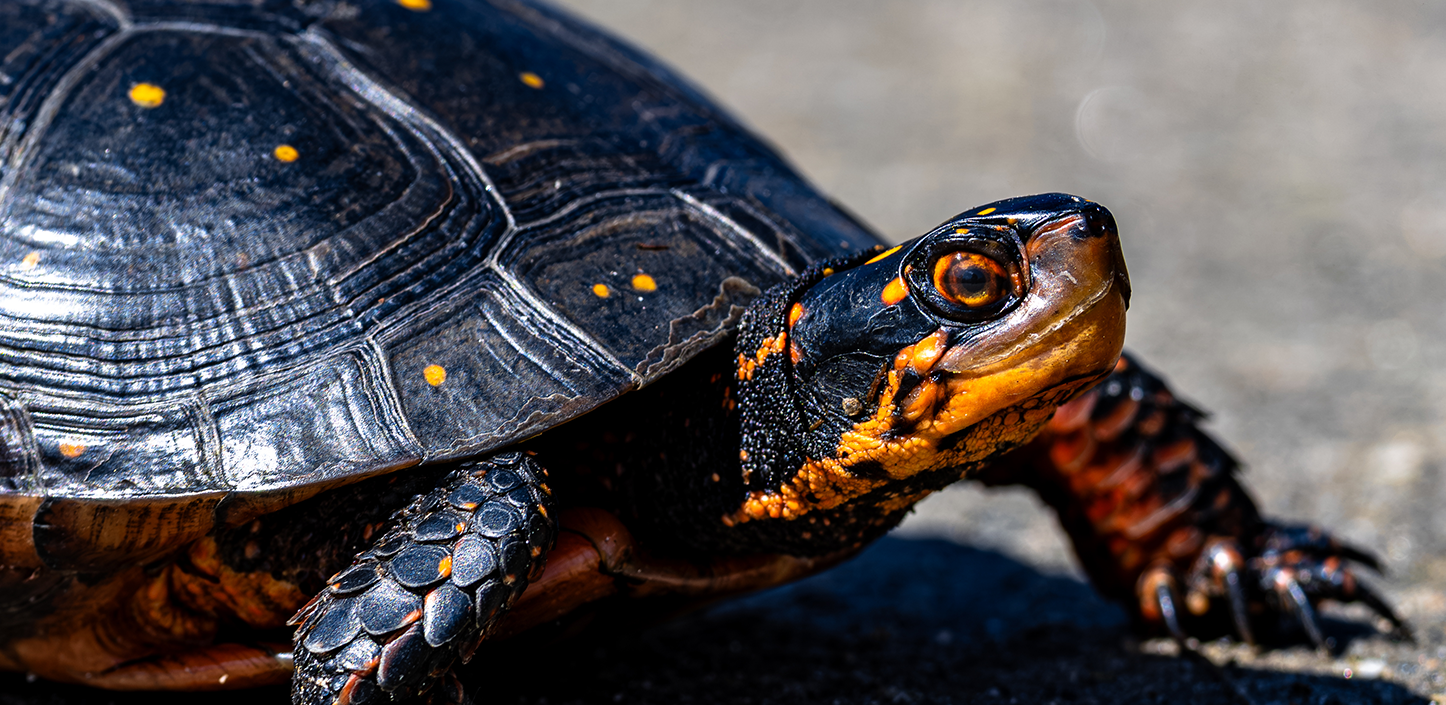
Spotted turtle
Imagine the first signs of spring after a frigid winter: a mostly thawed ground, snowy days giving way to rainy nights, and longer, lighter evenings. These are the conditions in which frogs and salamanders emerge en masse from their winter habitats and migrate to nearby wetlands and vernal pools to breed. These so-called “big nights” are a remarkable natural event—and a dangerous one, as these migration routes can intersect with busy roadways.
A recent news story from InDepthNH highlights a major effort to curb fatalities for scaly, slithery and other slow-moving wildlife migrating in New Hampshire: the state’s first-ever turtle and amphibian tunnels, designed to help animals safely cross the road in key habitats.
According to the New Hampshire Fish and Game Department, the project will upgrade road infrastructure at four high-priority sites, identified after more than a decade of monitoring and planning by the department. The effort includes new culvert underpasses and guide walls or fencing to steer wildlife toward safe passage beneath roadways, reducing road mortality and maintaining habitat connectivity.
This project, funded through NFWF’s America’s Ecosystem and Restoration Initiative, aims to benefit at-risk turtles and vernal pool amphibians, including species like Blanding’s turtles, spotted turtles and Jefferson salamanders. These species require a patchwork of wetland and upland forest habitats to thrive, and they face significant risks crossing at roads built through these critical areas.
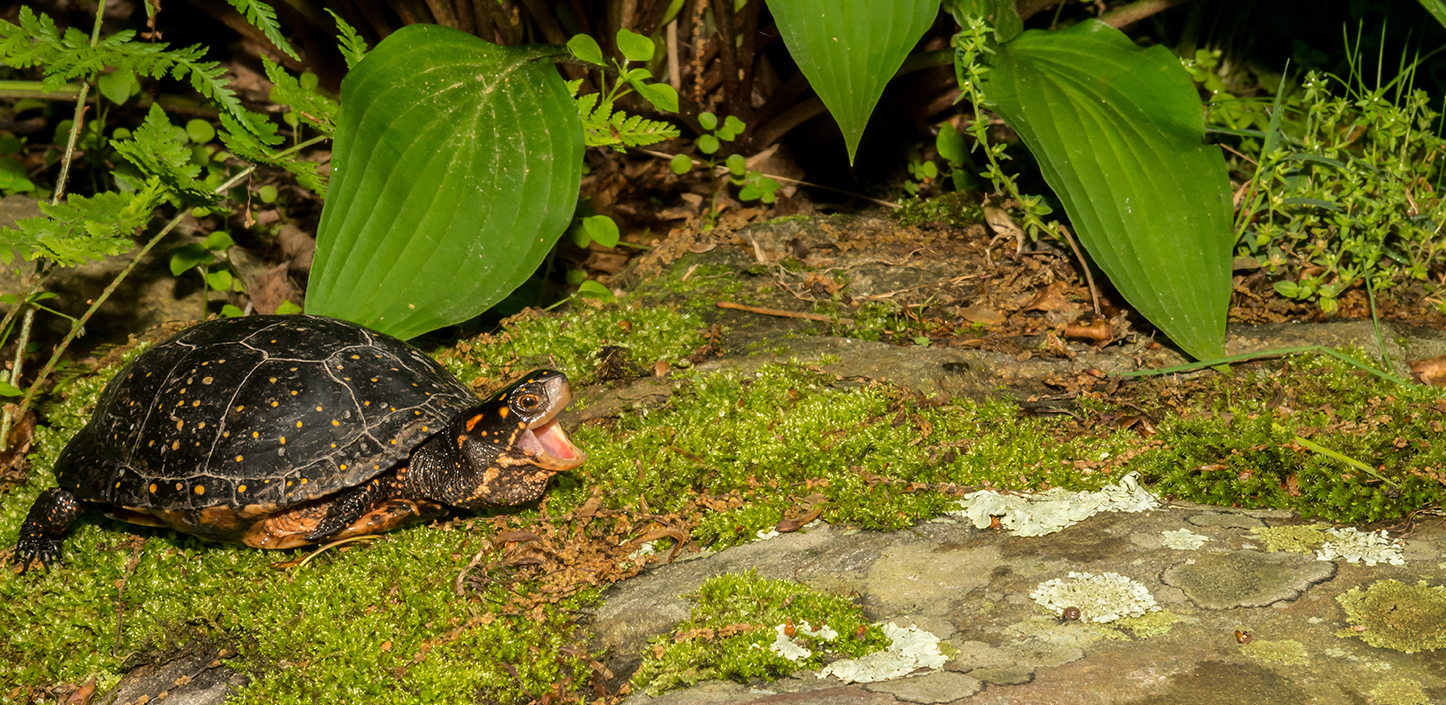
Spotted turtle
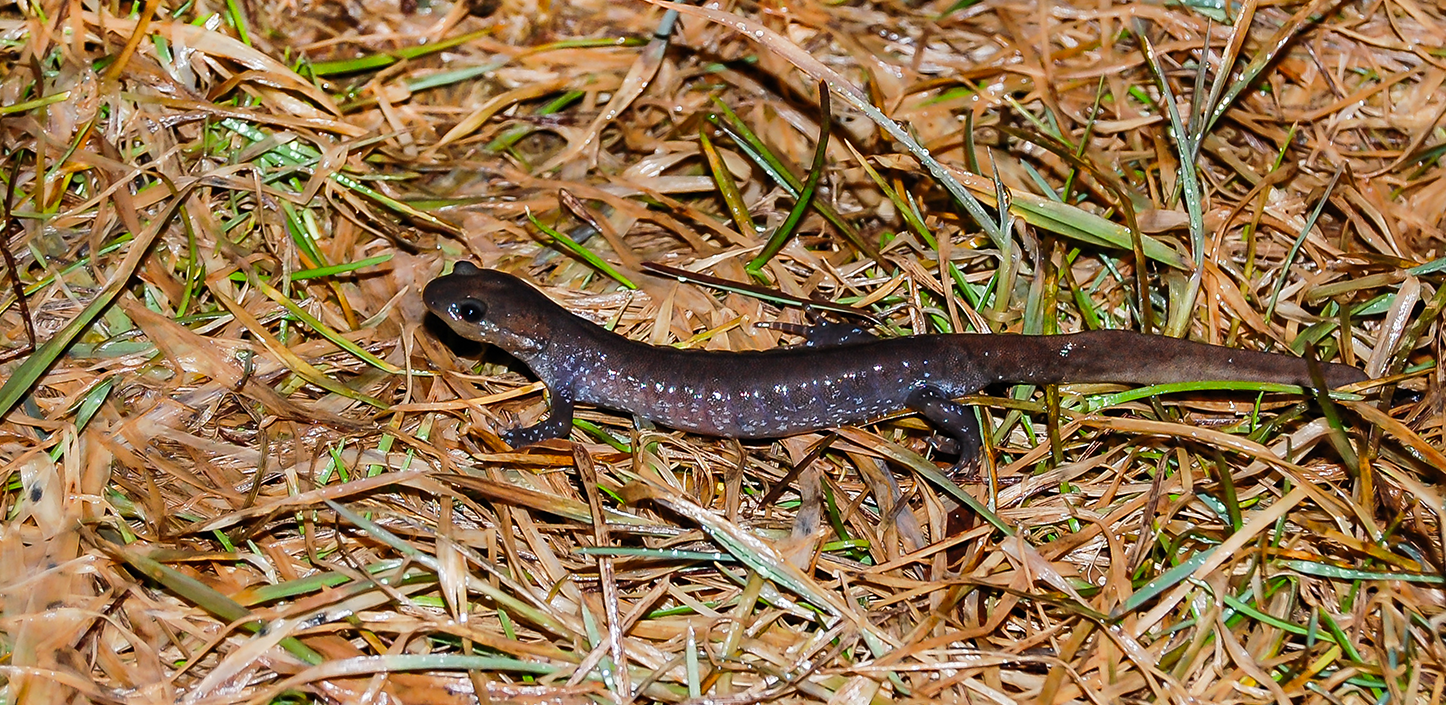
Jefferson salamander
Turtles are especially vulnerable to habitat fragmentation because they mature slowly, often not reproducing until 14 to 20 years, and have low hatchling survival rates. For long-lived species like Blanding’s and spotted turtles, which can survive for 70 years or more in the wild, a single roadside fatality represents the loss of decades of potential reproductive effort.
Migrating amphibians face similar challenges, and disruptions to their movements during a “big night” can have broader ecological consequences over time. Frogs and salamanders serve as an important food source for a wide range of predators, helping other species pack on the pounds after a lean winter. Because amphibians are both predators and prey, their decline can affect nutrient cycling across a complex food web.
By restoring connectivity between habitats and allowing turtles and amphibians to safely move across the landscape, the new wildlife crossings are expected to improve population resilience, genetic diversity and long-term viability for a wide range of wildlife. The project is also expected to serve as a model for similar restoration work throughout New England.
Learn more about this project here, or explore how NFWF’s America’s Ecosystem Restoration Initiative is supporting projects that restore habitat connectivity and protect fish and wildlife nationwide.