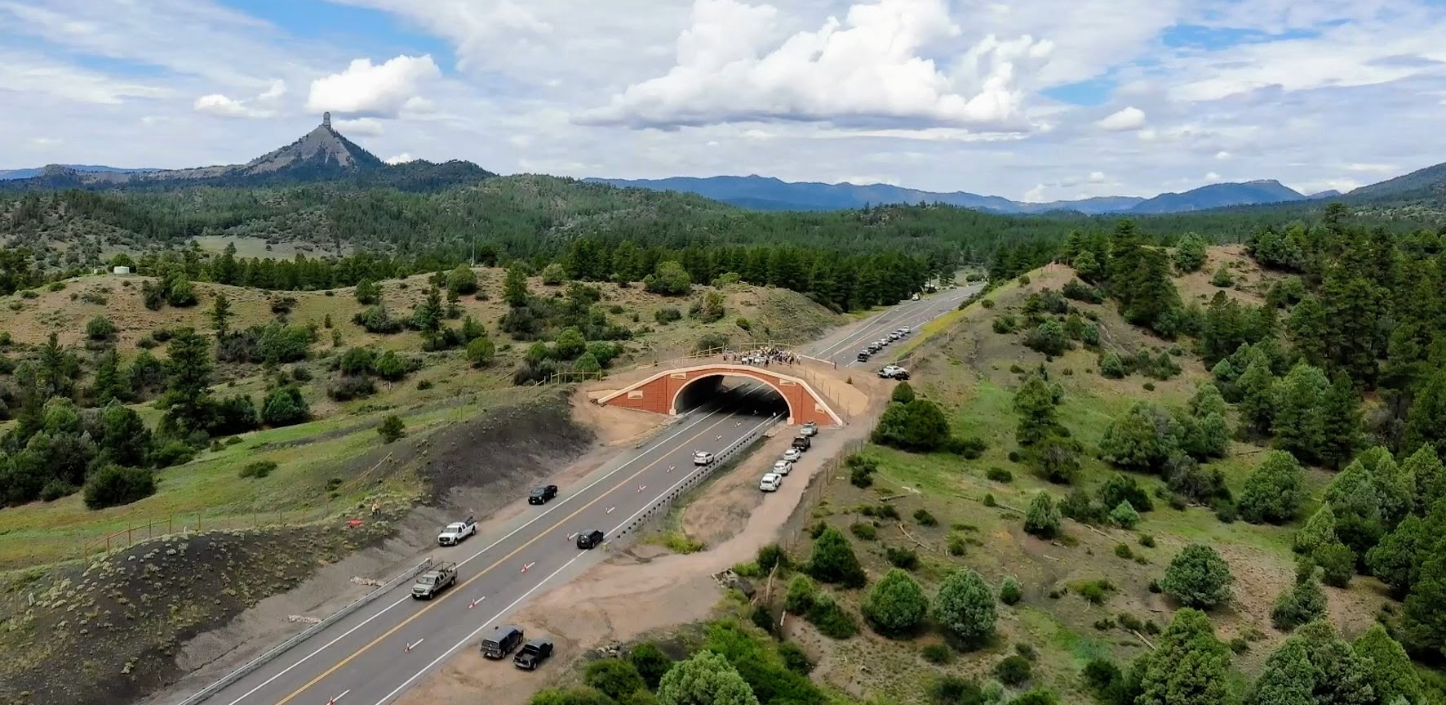
Construction crews install the wildlife overpass spanning U.S. Highway 160
Image
Reconnecting Colorado: How wildlife crossings are making highways safer for people and wildlife
Chimney Rock Highway Crossing on Highway 160
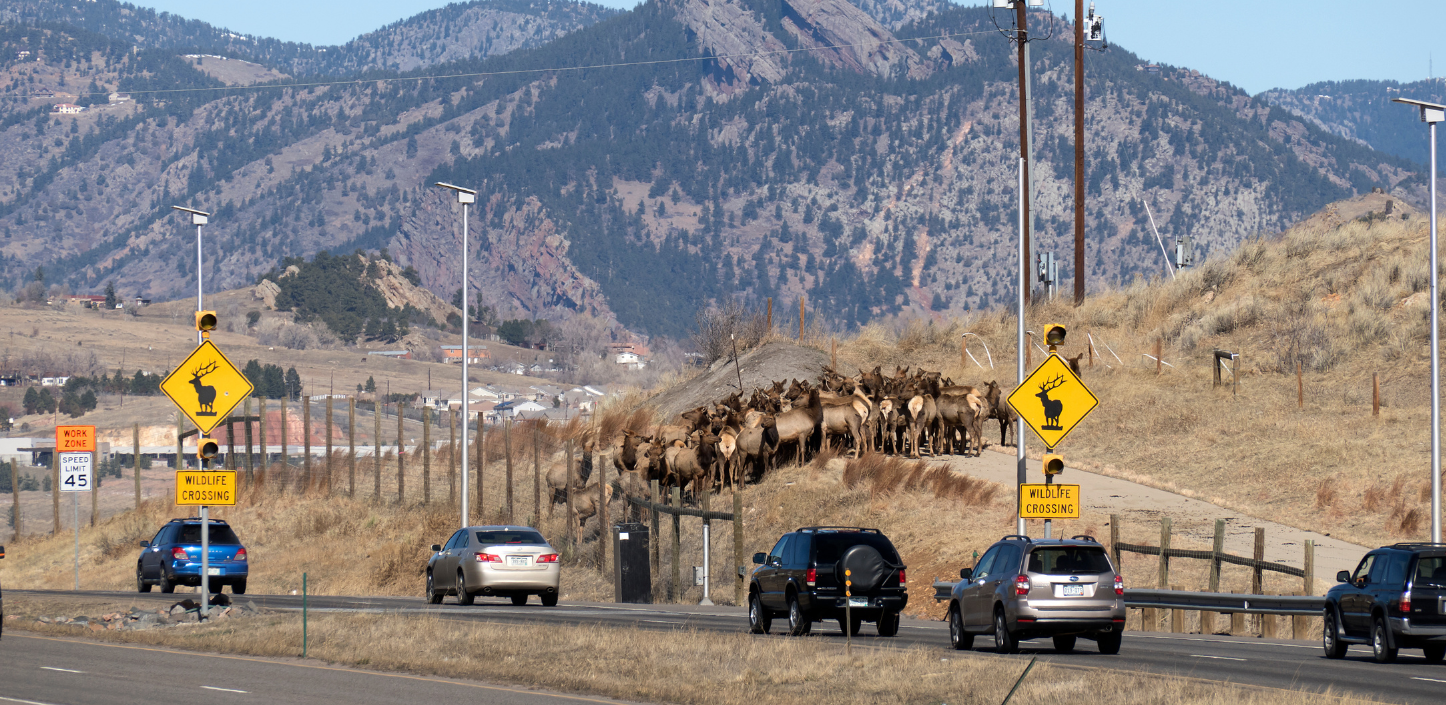
It’s a busy fall morning on stretch of Colorado highway, and rush-hour traffic is picking up. Along the fence line, more than 40 female and juvenile elk have bunched together, waiting for a break in the cars. Some drivers slow down. Some stop. Others speed past, not realizing how close they are to a collision that could total a vehicle, or injure or kill a passenger or one of the animals gathered just beyond the guardrail.
For generations, mule deer and elk have followed the same seasonal migration routes across Colorado, moving between high-elevation summer range and lower-elevation winter habitat each spring and fall. But as the state’s transportation network has expanded, many of those ancient migration pathways have become increasingly dangerous places to cross.
One such place is U.S. Highway 160 in southern Colorado. The highway cuts through expansive sagebrush shrublands and piñon-juniper woodlands that provide important habitat for resident and migratory wildlife. Along one section between Pagosa Springs and Durango, Colorado Parks and Wildlife found that nearly 60 percent of vehicle crashes involved wildlife.
Across the state, efforts are underway to reduce those conflicts. Colorado is emerging as a national leader in wildlife connectivity, investing in overpasses, underpasses and fencing systems that help animals move safely across the landscape while reducing risks for motorists. NFWF and its partners have helped advance that work through projects that reconnect migration routes long disrupted by roads and development.
A Costly Problem, Statewide
Roads help us move from place to place, but they can also cut off the routes animals rely on to reach food, water, seasonal range and breeding grounds, with consequences that ripple through entire herds.
Those consequences extend to Colorado communities, too. The state records nearly 4,000 wildlife-vehicle collisions every year, and some estimates put the real figure even higher. Deer are involved in more than 80 percent of those crashes, which together cost Coloradans roughly $80 million annually in property damage, medical treatment and other expenses.
The stakes go beyond dollars and fender benders. “When you hit an elk or deer, you’re taking away one of our most precious resources in Colorado,” Chuck Attardo, an environmental project manager with the Colorado Department of Transportation’s (CDOT), told Denver’s ABC 7. Hunting, angling and wildlife-related tourism contribute an estimated $5 billion a year to the state’s economy, Attardo notes. “So, there’s a significant economic investment in our wildlife as well.”
Two Projects, One Corridor
To address these challenges, NFWF has partnered with CDOT on multiple projects along U.S. Highway 160, a key transportation corridor that intersects some of Colorado’s most important big game habitat.
In the San Juan Basin, CDOT partnered with the Southern Ute Indian Tribe to improve habitat connectivity and reduce wildlife-vehicle collisions between Durango and Pagosa Springs — home to roughly 27,000 deer and 19,000 elk, the second- and third-largest herds of their kind in Colorado. NFWF funding helped extend fencing to existing overpass and underpass structures, guiding animals toward safe crossings instead of oncoming traffic.
“This is a heavily used corridor by vehicles and an important area in the San Juan Basin for big game,” said Scott Wait, senior aquatic biologist for Colorado Parks and Wildlife, in a project update. “Deer and elk spend the warm months in the high country to the north, but most big game move to the important winter range areas south of the highway during the winter. So there is a huge number of deer and elk that cross the highway at that location.”
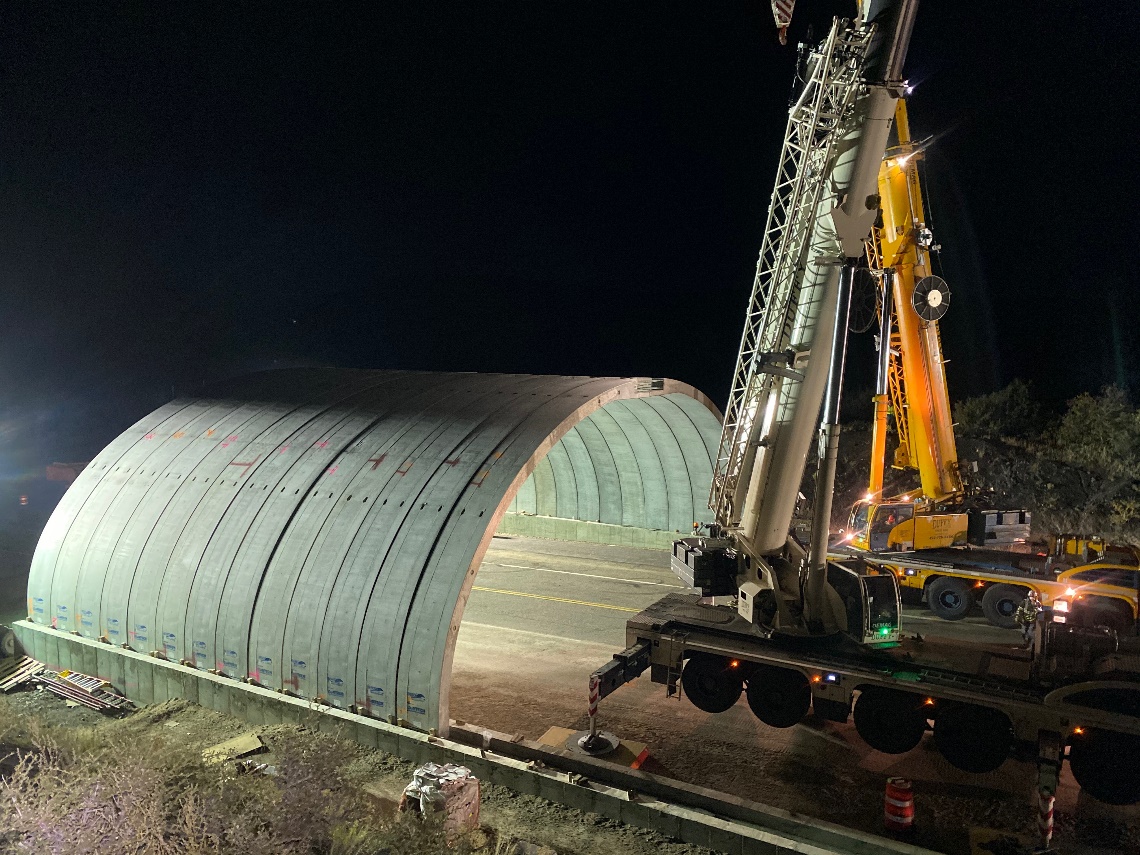
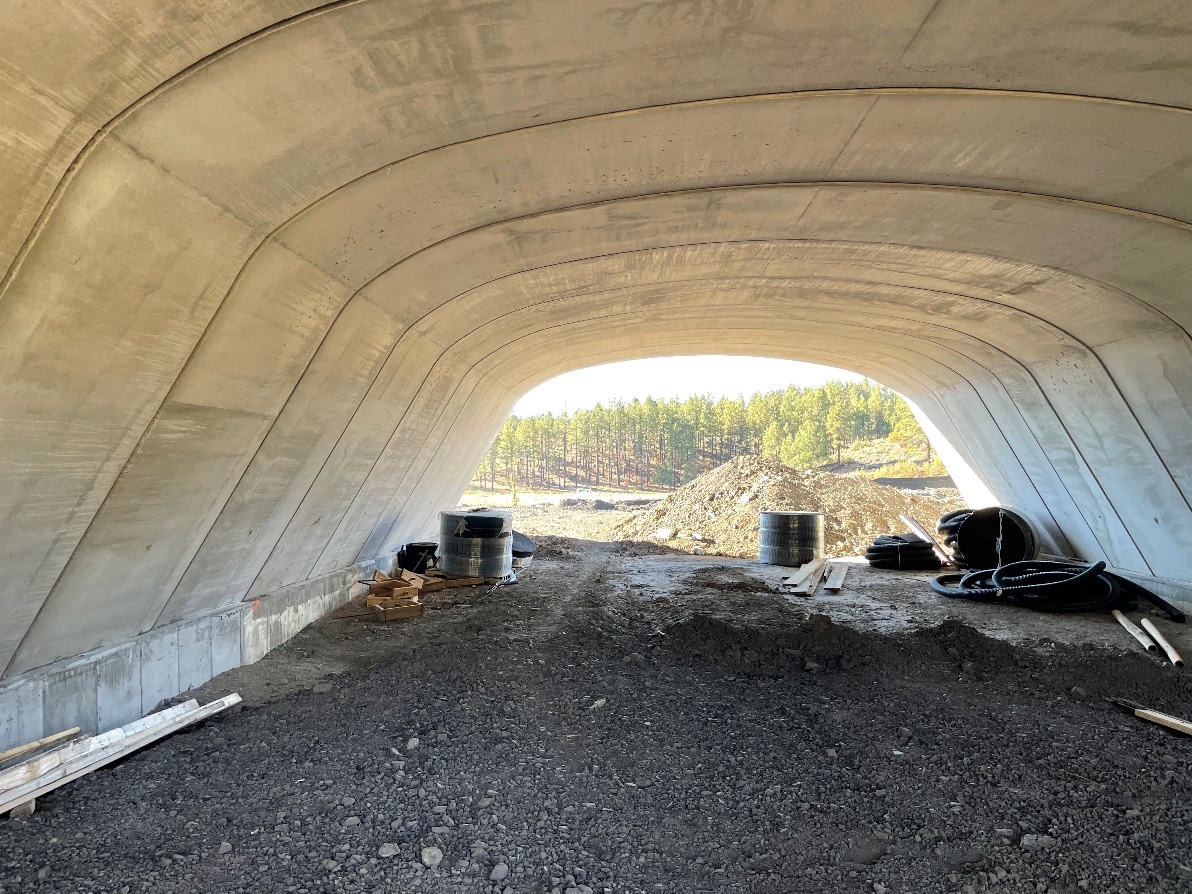
Designed for large mammals and other wildlife, the underpass complements the project's overpass to create multiple crossing options along this important migration route
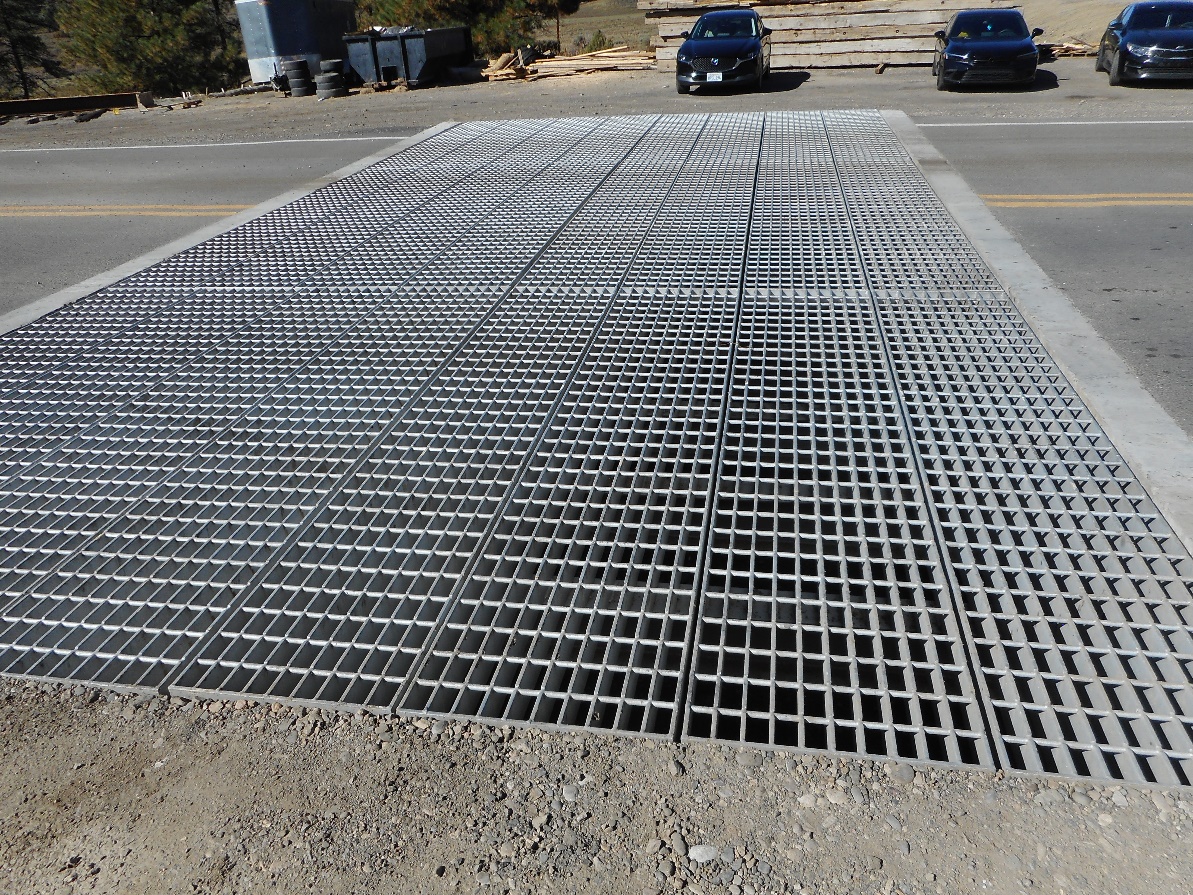
Deer guards help funnel animals away from traffic and toward safer crossing locations
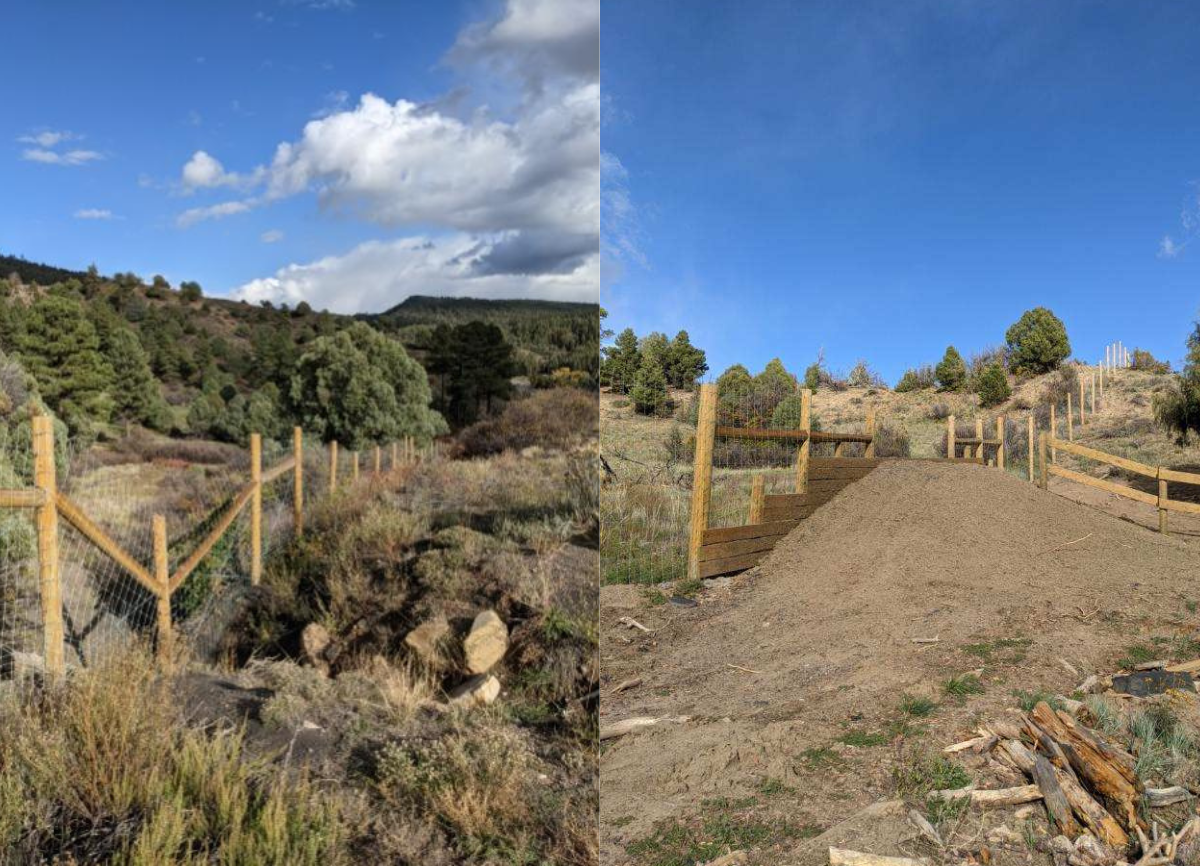
Wildlife fencing guides animals toward designated crossing points while reducing the likelihood of collisions with vehicles
Farther east, near Fort Garland, NFWF funding awarded through the RESTORE Colorado program helped CDOT construct three new wildlife underpasses and 7 miles of exclusionary fencing to guide animals beneath the highway rather than across it. Early results have been promising: CDOT reported a significant drop in wildlife-vehicle collisions along the corridor during construction, and officials project an 80 percent decrease in vehicle crashes with big game there as wildlife grow accustomed to using the new structure.
Some of the clearest evidence of success comes from trail cameras positioned at the crossing structures. At the U.S. 160 crossing west of Pagosa Springs, monitoring cameras have documented a menagerie of species using the structure: mule deer, elk, red foxes, gray foxes, coyotes, mountain lions, cottontail rabbits and snowshoe hares have all been recorded safely crossing the highway.
Collaboration Ensures Wildlife — and Passengers — Arrive Safely
Across Colorado, wildlife crossings paired with exclusionary fencing have consistently driven down collision numbers. But building effective wildlife crossings requires much more than engineering expertise.
These projects depend on transportation agencies, tribal governments, conservation groups, private landowners and philanthropic partners aligning around a shared goal — and the U.S. 160 corridor is a case in point, combining state transportation dollars, tribal investment and conservation funding to address a longstanding collision hotspot.
“Wildlife doesn’t recognize property lines or political boundaries, and effective conservation can’t either,” said Louis Bacon, Founder and Chairman of The Moore Charitable Foundation, whose Colorado affiliate is the Trinchera Blanca Foundation. “The most durable solutions come when landowners, transportation agencies, tribal nations, conservation organizations, and local communities work together toward a shared goal. Wildlife crossings are a powerful example of what can happen when we invest collaboratively in infrastructure that protects the people, landscapes and wildlife that call Colorado home.”
Through programs like RESTORE Colorado and Rocky Mountain Rangelands, NFWF continues to invest in projects that strengthen these migration routes, working alongside state, federal and private funding partners to identify where the next crossing is needed most.
Contributing Partners: Bezos Earth Fund, BNSF Railway, Bureau of Land Management, Capri Holdings Ltd., Cargill, Chevron, Colorado Department of Natural Resources, ConocoPhillips, Darden, Gates Family Foundation, Great Outdoors Colorado, Nestle, Occidental, Taco Bell, Terra Foundation, Trichera Blanca Foundation, an affiliate of Moore Charitable Foundation, U.S. Fish and Wildlife Service, U.S. Forest Service, USDA Natural Resources Conservation Service and Walton Family Foundation