Avian Research and Conservation Institute’s Mariah Hryniewich holds a swallow-tailed kite while Gina Kent attaches a transmitter
Image
Timber, talons and the return of the swallow-tailed kite
Swallow-tailed kite
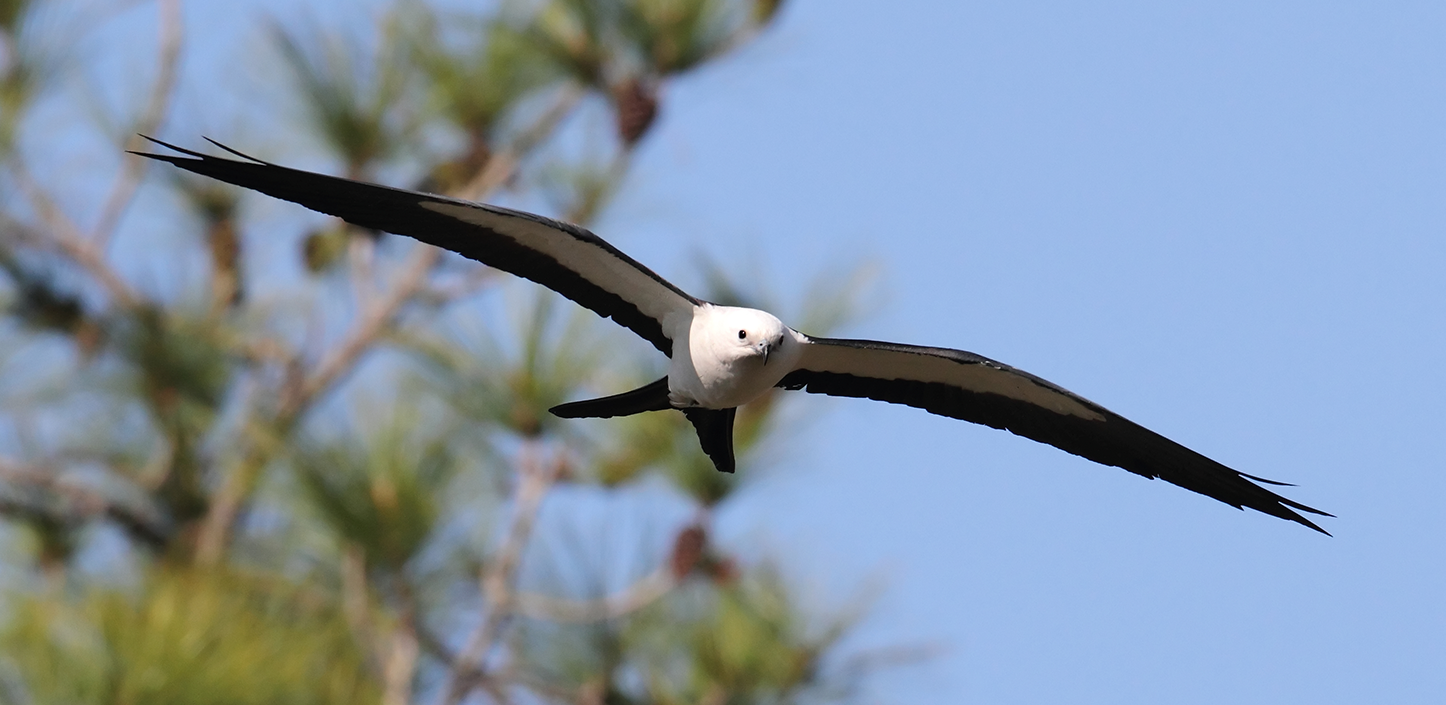
There is a moment, if you are lucky enough to see it, when a swallow-tailed kite turns above the treeline and everything else falls away.
With its striking black-and-white wings and deeply forked tail that seems to steer like a ribbon in the wind, the bird seems almost unreal in flight. But for conservationists, foresters and landowners across the Southeast, the swallow-tailed kite is not only a beautiful sight, but a sign of a healthy, diverse forest landscape.
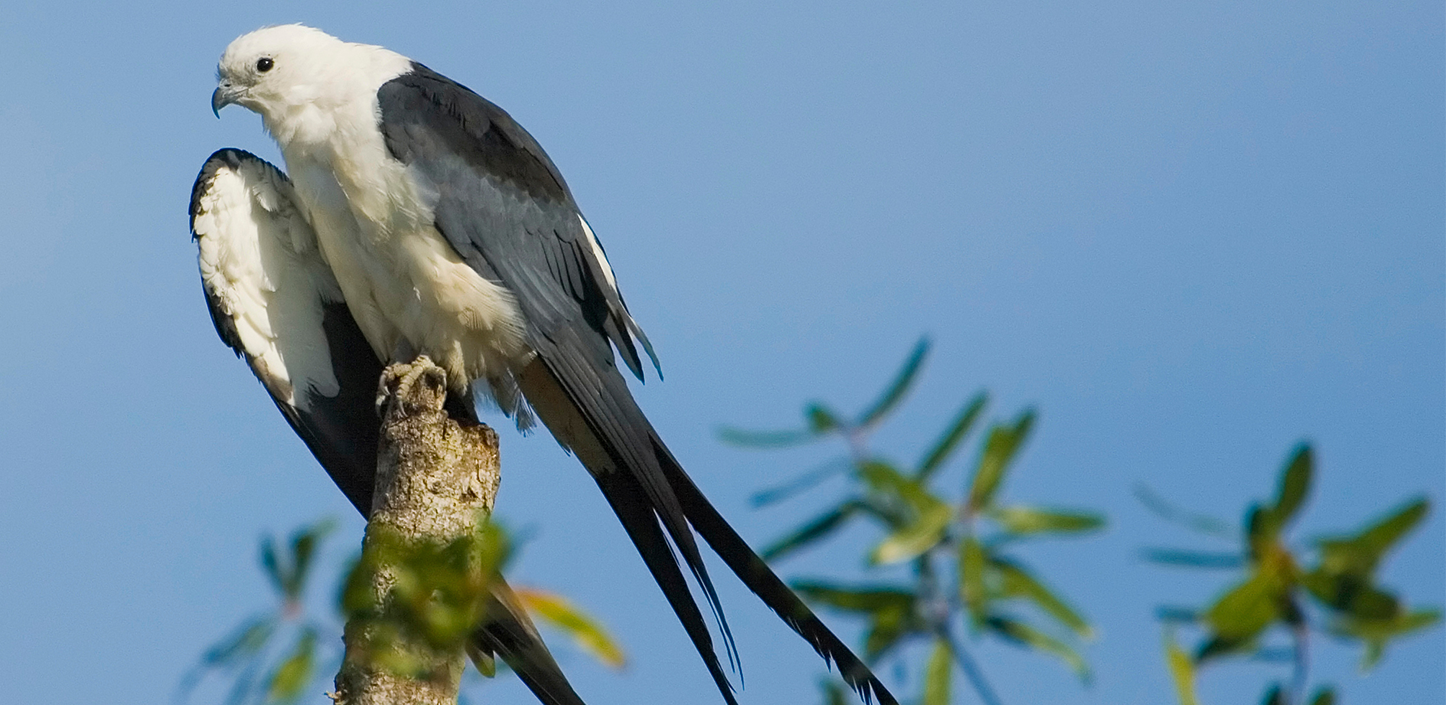
Swallow-tailed kites are among the most striking raptors in North America. Prior to the 1900s, they nested in at least 21 states. But as forests disappeared, so did the kites. These birds have very specific habitat needs, including tall trees for nesting, often near wetlands, and open spaces to forage. The kinds of places where sunlight reaches low vegetation, making insects and small prey easier to find. In the Southeast, those ingredients often come together in sustainably managed working forests. Today, swallow-tailed kites can be seen nesting in eight states when conditions are right, and partners are working to increase the numbers of this beautiful bird in North American skies.
That is what makes the partnership among the National Fish and Wildlife Foundation (NFWF), International Paper, American Bird Conservancy, Orleans Audubon Society, and the Avian Research and Conservation Institute (ARCI) so significant. Together, we’re showing that sustainably managed working forests can support wildlife while continuing to provide economic value for landowners and communities.
International Paper has worked with American Bird Conservancy since 2020 to advance bird-focused management recommendations for private forest landowners, including practices that help maintain habitat for at-risk species such as the swallow-tailed kite. This work builds on decades of earlier research and habitat management recommendations developed by ARCI, whose swallow-tailed kite work began on Florida public lands and later expanded to commercial timber lands across Florida, Georgia, and South Carolina, with long-standing support from NFWF. Together, these efforts reflect a broader commitment through NFWF and International Paper’s Forestland Stewards Partnership to promote forest management that benefits both people and wildlife.
Ken Meyer, ARCI senior research ecologist and executive director, emphasized the critical role of thoughtfully managing working forests for kite recovery. “Sustainable forests are a really good thing for wildlife,” Meyer said. “If growing timber wasn’t such a productive industry in the Southeast, we wouldn’t have forests, we’d have houses, commercial development or other land uses. We’d have all kinds of things out here that don’t support the wildlife that these forests do.”
When a swallow-tailed kite flies over a working forest, it is proof that the choices that keep forests healthy also help keep wildlife here.
In the Southeast, about 90 percent of forestland is privately owned. Working forests are constantly changing landscapes, with some stands in early growth, others in mature phases and still others recently harvested. That mix can create exactly the conditions swallow-tailed kites need: tall trees for nesting and open areas for foraging. The birds often hunt along forest edges and over young stands, feeding on large insects, frogs, snakes and other small prey.

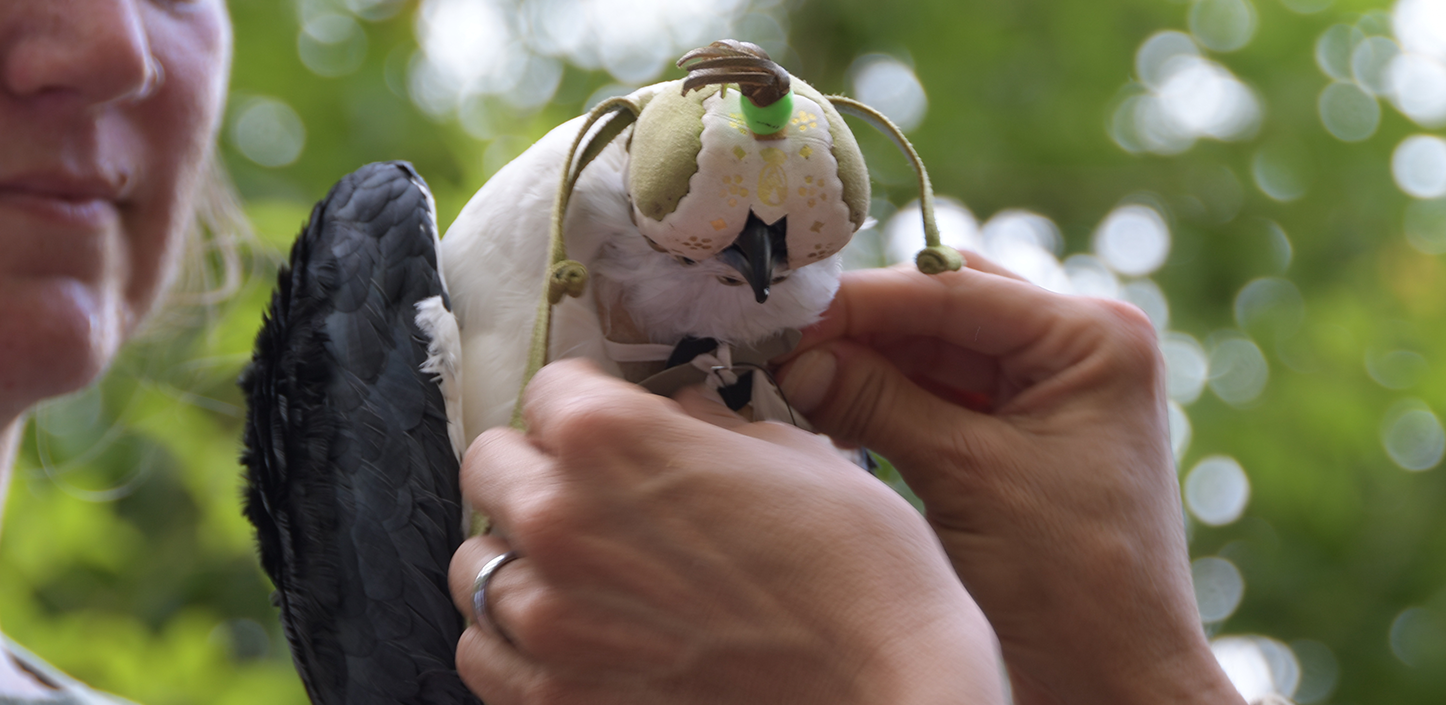
Placing a transmitter on a swallow-tailed kite in South Carolina
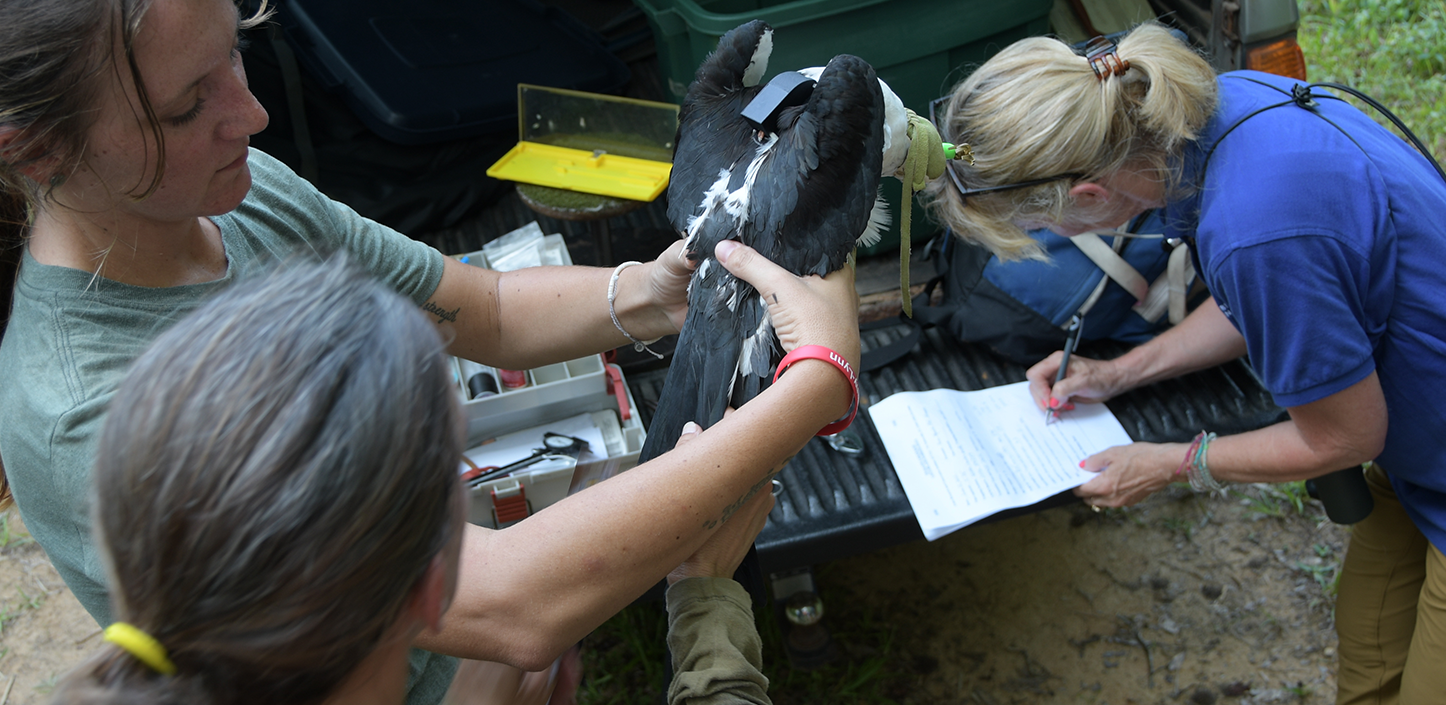
View of transmitter on the back of a swallow-tailed kite
Researchers and conservation partners have documented that swallow-tailed kites can thrive in these actively managed forest systems. Near Georgetown, South Carolina, collaborators have fitted some birds with GPS transmitters to better understand their migratory routes, which span thousands of miles, as well as roosting areas and wintering grounds in South America, and the nesting and foraging habitats they use when they return to the United States. That information helps foresters and landowners make management decisions that support swallow-tailed kites and other forest-dependent wildlife.
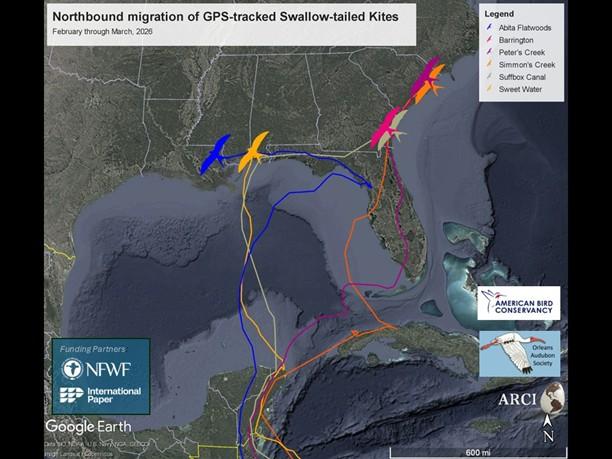
ARCI shares sightings of GPS-tracked swallow-tailed kites on their website. In March, the kites began crossing the Gulf from South America and arriving on breeding territories in the southeastern United States, marking the seasonal return of the species to landscapes where partners have been working to sustain their habitat.
For NFWF and our partners, the swallow-tailed kite is both an ambassador and an indicator. It’s a striking bird that provides foresters and biologists with an entry point with landowners to discuss how modest changes in forest management can make a big difference for kites and other bird species. Its presence signals that forests are providing a range of conditions that wildlife need, from nesting cover to feeding grounds. With shared goals for healthy, sustainable forests, the collaboration is helping ensure that working lands can remain productive while also making room for the species that depend on them.
For this partnership, that means tracking more kites, translating new insights into practical guidance, and reaching more landowners with tools that support both wildlife and working lands. And doing this all with partners committed to keeping forests healthy, so the sight of a kite flying over the trees can remain part of the Southeast’s spring sky for generations.