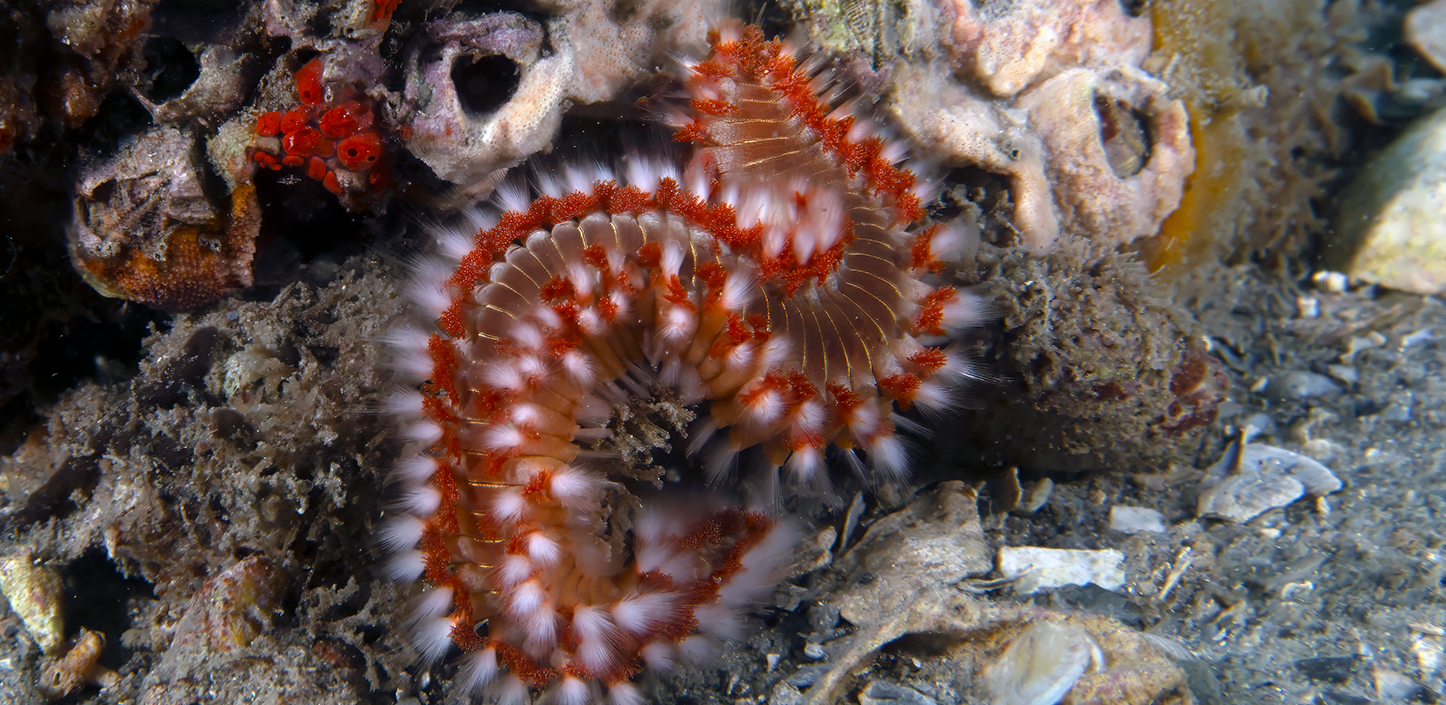
A bearded fireworm in a coral reef in the Florida Keys
Image
Unexpected Allies: How spiny lobsters can help shield coral reefs from predators
Spiny lobster
Spiny lobsters are a familiar sight among the United States’ coral reefs, with their long, horn-like antennae peeking out from gaps in the craggy reef face. Researchers with the Florida Fish and Wildlife Conservation Commission (FWC)’s Fish and Wildlife Research Institute have found these familiar figures may be playing an unfamiliar role in protecting our fragile coral reefs.
Chemical cues from lobsters, released through their urine, have been found to deter coral predators — especially corallivorous (coral-eating) snails and fireworms.
The finding is one of the more unusual conclusions of a three-year study by scientists from the FWC, supported by a grant awarded through NFWF’s Coral Reef Stewardship Fund, managed in partnership with the National Oceanic and Atmospheric Administration (NOAA) and supported by Aramco Americas.
Coral reefs in the Florida Keys suffered a devastating heat wave in summer 2023, with water temperatures reaching more than 90 degrees Fahrenheit for days at a time. The high temperatures triggered mass bleaching and widespread mortality across reefs that coral restoration practitioners had spent years rebuilding.
But the problem didn’t start there. Florida’s coral reef has lost an estimated 90 percent of its healthy coral cover since the late 1970s, the result of decades of disease, nutrient pollution and thermal stress. Active restoration — growing coral fragments in land-based and underwater nurseries, then outplanting them to degraded reefs — has become a central tool for slowing that decline. But outplanted corals are especially vulnerable to corallivorous snails and fireworms that feed on coral tissue.
Spiny lobsters play a vital role in maintaining coral reef equilibrium, yet stressors like warm ocean temperatures can disrupt this balance and cause cascading ripple effects on the food web. Scientists found that spotted spiny lobsters at healthier reef sites ate a narrower range of prey, including fireworms and even invasive lionfish. As reef health declined and preferred prey became scarcer, lobsters shifted toward organisms lower in the food web, including herbivores that help protect corals from algal overgrowth, leaving the damaged reef even more vulnerable.
Following the 2023 heat wave, researchers with FWC sought to learn how to work within the constraints of a warming future, both for the benefit of coral and for the many species that rely on its complex ecosystem.
“There’s so much effort going into coral reefs right now trying to safeguard them and restore them as well as you can,” Casey Butler, the FWC’s spiny lobster research program lead, told the Miami Herald. “But is there a way to let you know the biology of the system works in your favor, so you don’t have to do as much work?”
One idea was to see if the spotted spiny lobster, a common denizen in Florida’s coral reef systems, could be leveraged to reduce predation on outplanted corals.
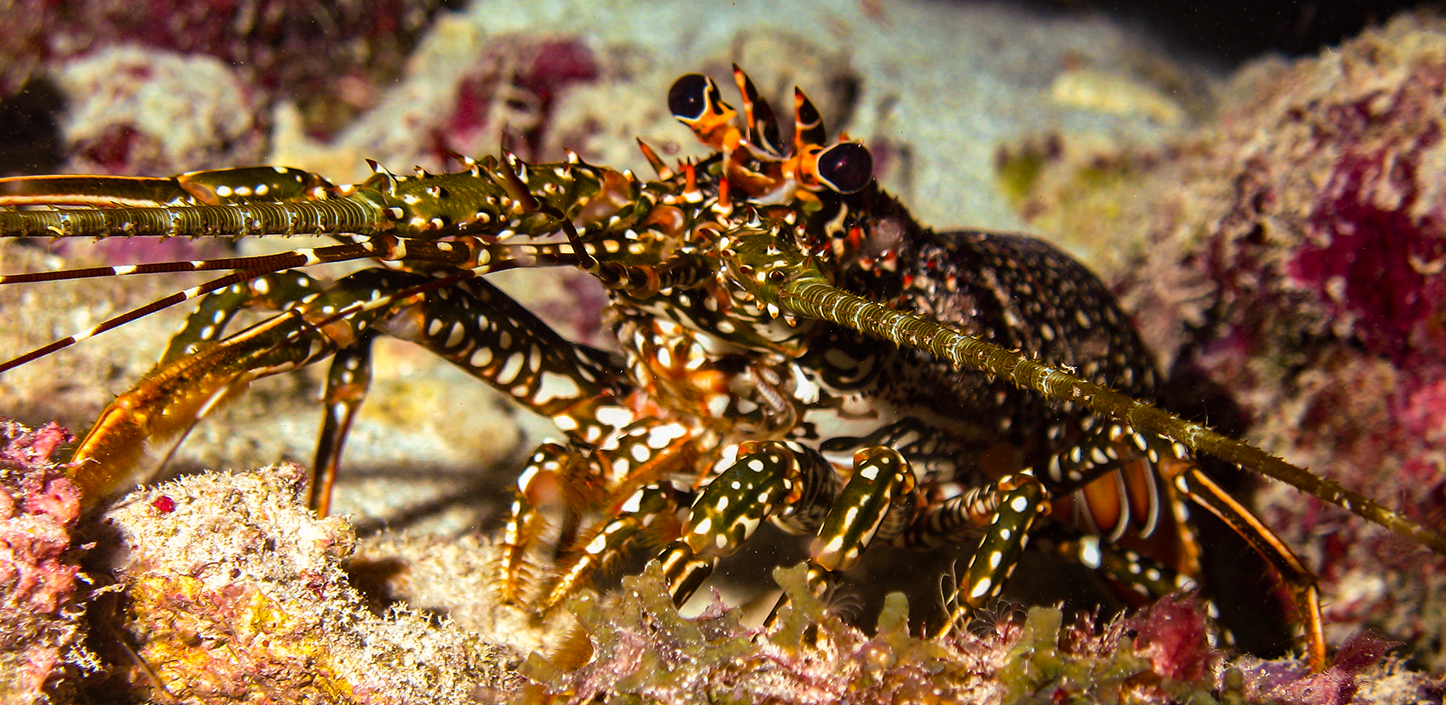
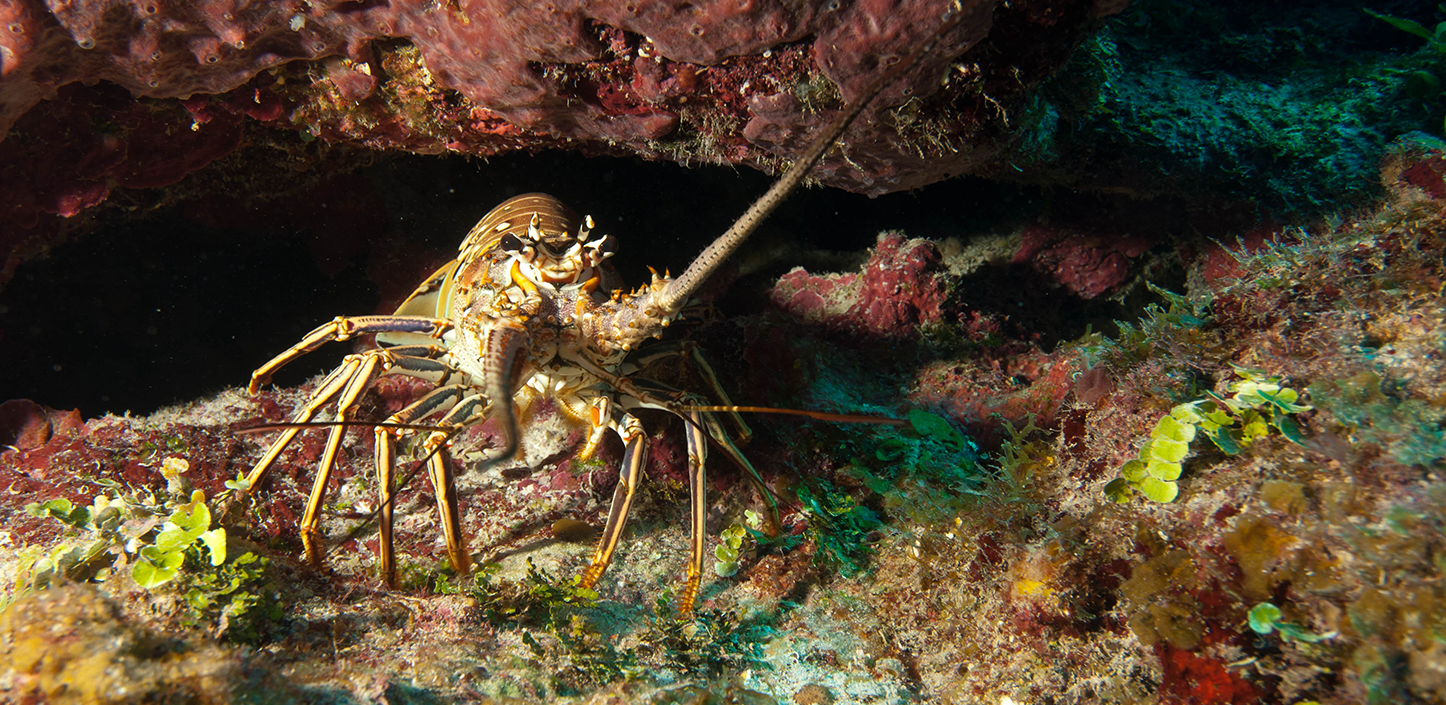
Spiny lobster off the coast of Islamorada, Florida
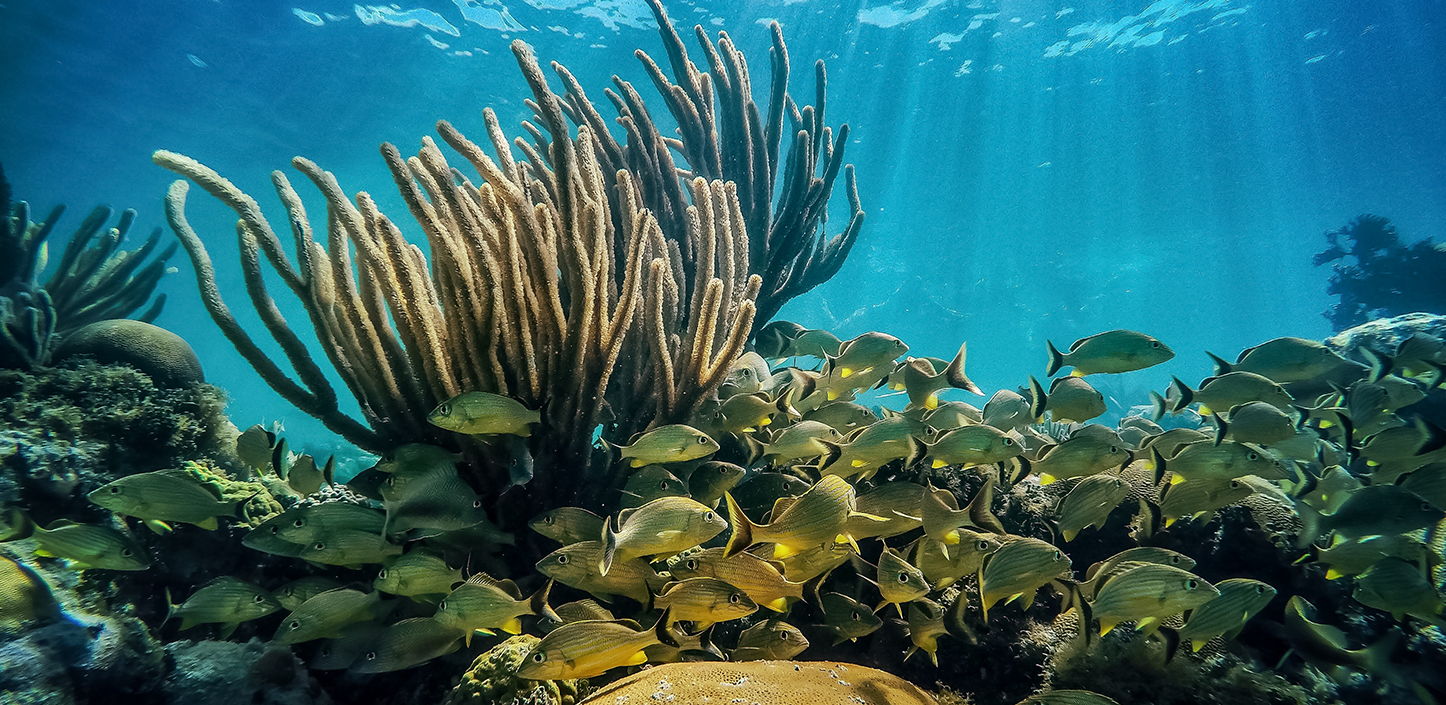
A healthy coral reef scene in Florida
The four-part FWC study combined field surveys across 18 established restoration sites in the Lower Florida Keys, a controlled field experiment outplanting nearly 1,000 staghorn coral fragments across nine patch reefs, DNA analysis of the lobsters’ gut contents to determine what they eat, and laboratory experiments testing the behavioral effects of lobster chemical cues on corallivores.
The most striking finding came not from the field, but from the laboratory. In a custom-designed chamber, corallivorous snails and fireworms consistently avoided water that had traces of lobster urine. The Caribbean spiny lobster and the spotted spiny lobster, the two lobster species tested, frequently release urine as a form of social communication. For coral predators like the snails and fireworms, that chemical signal reads as a warning to stay away.
“The spotted spiny lobsters are sort of the knights in spiny armor, if you will,” said Butler. Simply protecting spotted lobsters on a reef, or outplanting near sites with naturally high densities of lobsters, might be more beneficial to coral restoration efforts than trying manually to remove snails or fireworms that eat coral.
The findings are not a “silver bullet” to bring back the South Florida reef tract, Butler acknowledges to The Guardian. But the study underscores the need for ecosystem-based approaches to reef restoration, not just for coral and coral-dependent marine life, but for the benefit of local communities and economies as well.
According to NOAA, coral reefs contribute over $3.4 billion each year to the U.S. economy, supporting more than 70,000 jobs in tourism, fishing and recreation in southeast Florida alone. They also provide flood protection benefits of $2.6 billion annually across the United States. Beyond these direct economic benefits, coral reefs provide integral cultural capital and hold vast potential for industries such as pharmaceuticals.
Learn more about how the Coral Reef Stewardship Fund is supporting projects like these that restore reef ecosystems and strengthen resilience for marine life and coastal communities nationwide.