NFWF Announces $1.2 Million for Pecos River Watershed Restoration and Native Species Recovery
Four grants generate $2.6 million in conservation impact to enhance grassland habitat, restore aquatic habitats and conserve desert fish species found nowhere else in the world
WASHINGTON, D.C. (August 20, 2026) – The National Fish and Wildlife Foundation (NFWF) today announced nearly $1.2 million in grants to restore and sustain healthy rivers and streams, improve grassland ecosystems, and support the recovery of native aquatic species across the Pecos River watershed of southeastern New Mexico and West Texas.
The grants were awarded through the Pecos Watershed Conservation Initiative (PWCI), an innovative public-private partnership that leverages resources from corporate partners including Occidental, ConocoPhillips, Chevron, ExxonMobil and Apache Corporation, as well as from federal agencies including the U.S. Bureau of Land Management.
The four grants announced today will generate nearly $1.5 million in matching contributions for a total conservation impact of more than $2.6 million. Implementation partners include soil and water conservation districts, nonprofit organizations and universities.
“Through the Pecos Watershed Conservation Initiative, our grantees and funding partners are collaborating to protect species of conservation concern at a landscape scale in the Pecos River watershed,” said Jeff Trandahl, executive director and CEO of NFWF. “The Initiative, now in its ninth year, demonstrates the far-reaching impacts of public-private conservation partnerships, supporting native fish and grassland species from upland habitat restoration to instream recovery efforts.”
The projects supported by the four grants will advance the following long-term goals of the Initiative:
- Improve the management and function of native grasslands, many of which have been negatively impacted by past management and fragmentation
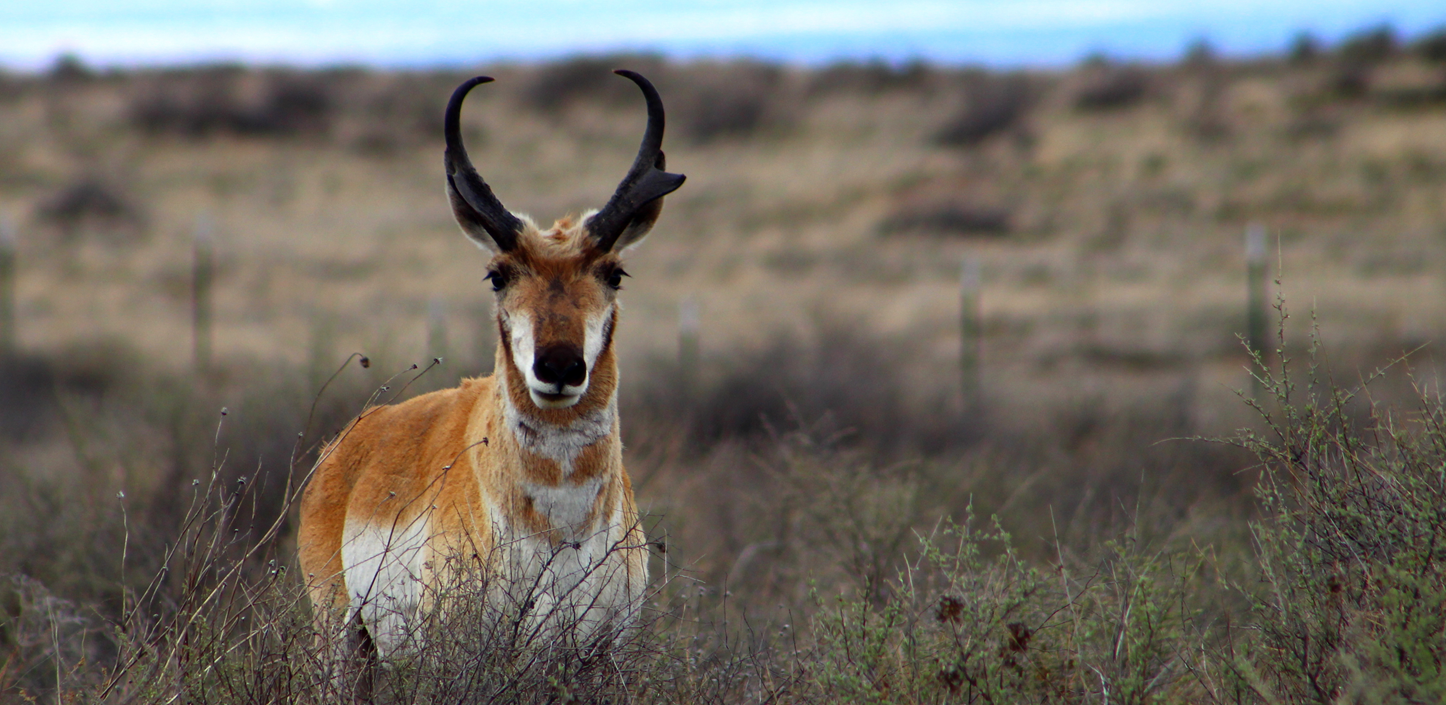
- Increase grassland connectivity to allow for the seasonal movements of resident pronghorn within the species’ range that are important for their survival
- Research data gaps for species and their conservation needs
- Strengthen the health of habitat along the Pecos River and its tributaries in West Texas and southern New Mexico, including some of the last remaining populations of fish and other aquatic species found only in the Chihuahuan Desert
- Identify opportunities to re-establish species in areas of their range where they have been lost or bolster small remnant populations
In a joint statement, the five corporate partners of the Initiative said: “The Pecos Watershed is an extraordinary resource that is home to iconic grassland species such as pronghorn and endemic fish species like the Pecos gambusia, which is found nowhere else in the world. We are proud to support local organizations in their commitment to restoring habitat and protecting populations of these unique and remarkable species. By improving ecosystem function through brush management, increased grassland connectivity, protection of native fish, and assessment of habitat data to inform conservation efforts, we are preserving this ecosystem for future wildlife and communities.”
The funded projects will address key conservation opportunities across both terrestrial and aquatic ecosystems. Grassland restoration work will improve the quality and connectivity of native habitat for pronghorn and migratory grassland birds.
“We are honored to continue our restoration efforts with NFWF and other partners in support of grassland restoration in the Pecos River Watershed. As we approach nearly a decade of partnership we are seeing how our collaborative efforts build over time, creating positive impacts and greater benefit for both the land and wildlife while also continuing to support our agency’s mission,” said Shannon Gentry, state rangeland management specialist for the Bureau of Land Management’s New Mexico State Office.
River and stream restoration projects will also help safeguard imperiled aquatic species including the Pecos gambusia and Texas hornshell mussel. These projects will address critical knowledge gaps by collecting data needed to inform future habitat restoration and species recovery strategies throughout the watershed.
“The U.S. Fish and Wildlife Service is proud to partner with the National Fish and Wildlife Foundation and local stakeholders to advance conservation throughout the Pecos watershed,” said Seth Willey, ecological services assistant regional director for the U.S. Fish and Wildlife Service. “Through collaborative conservation, we are restoring habitats, supporting native species, and working to support the long-term health of this unique ecosystem for future generations.”
Since its inception in 2018, the PWCI has invested a total of nearly $14.9 million in 66 projects across the Pecos River watershed.
A complete list of the 2026 grants made through the Pecos Watershed Conservation Initiative is available here.
About the National Fish and Wildlife Foundation
The National Fish and Wildlife Foundation (NFWF) works with partners to foster sustainable and impactful conservation solutions so that people and nature thrive together. Chartered by Congress in 1984, NFWF has grown to become the nation’s conservation foundation. NFWF works with the public and private sectors to sustain, restore and enhance the nation’s fish, wildlife, plants and habitats for current and future generations. Since its founding, NFWF has supported more than 7,200 grantee organizations and funded more than 23,900 projects that have generated a total conservation impact of more than $12 billion. Learn more at nfwf.org.
About Occidental
Occidental is an international energy company that produces, markets and transports oil and natural gas to maximize value and provide resources fundamental to life. The company leverages its global leadership in carbon management to advance lower-carbon technologies and products. Headquartered in Houston, Occidental primarily operates in the United States, the Middle East and North Africa. To learn more, visit oxy.com.
About the Bureau of Land Management
The BLM manages approximately 245 million acres of public land located primarily in 12 Western states, including Alaska. The BLM also administers 700 million acres of sub-surface mineral estate throughout the nation. The agency’s mission is to sustain the health, diversity, and productivity of America’s public lands for the use and enjoyment of present and future generations.
About ConocoPhillips
ConocoPhillips is an independent exploration and production company headquartered in Houston, Texas. The company explores for, produces, transports and markets crude oil, bitumen, natural gas, natural gas liquids and liquefied natural gas worldwide. For more information, visit conocophillips.com.
About Chevron
Chevron is one of the world's leading integrated energy companies and one of the largest producers of oil and natural gas in the Permian Basin, where it has been operating for more than 100 years. The company’s purpose is to develop the affordable, reliable, ever-cleaner energy that enables human progress. Chevron works to protect the environment through responsible operations and proudly supports partners like the Pecos Watershed Conservation Initiative who share that commitment in the Permian Basin. For more information, visit https://www.chevron.com/permian.
About ExxonMobil
ExxonMobil, one of the largest publicly traded international energy and petrochemical companies, creates solutions that improve quality of life and meet society’s evolving needs. The corporation’s primary businesses – Upstream, Product Solutions and Low Carbon Solutions – provide products that enable modern life, including energy, chemicals, lubricants, and lower emissions technologies. ExxonMobil holds an industry-leading portfolio of resources, and is one of the largest integrated fuels, lubricants, and chemical companies in the world. ExxonMobil also owns and operates the largest CO2 pipeline network in the United States. In 2021, ExxonMobil announced Scope 1 and 2 greenhouse gas emission-reduction plans for 2030 for operated assets, compared to 2016 levels. The plans are to achieve a 20-30% reduction in corporate-wide greenhouse gas intensity; a 40-50% reduction in greenhouse gas intensity of upstream operations; a 70-80% reduction in corporate-wide methane intensity; and a 60-70% reduction in corporate-wide flaring intensity. With advancements in technology and the support of clear and consistent government policies, ExxonMobil aims to achieve net-zero Scope 1 and 2 greenhouse gas emissions from its operated assets by 2050. To learn more, visit exxonmobil.com and ExxonMobil’s Advancing Climate Solutions.
About Apache Corporation
Apache Corporation, a wholly owned subsidiary of APA Corporation (Nasdaq: APA), is an oil and gas exploration and production company with operations in the United States, Egypt and the United Kingdom. Apache’s parent corporation, APA Corporation, posts announcements, operational updates, investor information and press releases on its website www.apacorp.com.
About the U.S. Fish and Wildlife Service
The U.S. Fish and Wildlife Service works with others to conserve, protect, and enhance fish, wildlife, plants, and their habitats for the continuing benefit of the American people. For more information, visit www.fws.gov, and connect with us on social media: Facebook, Instagram, X (formerly known as Twitter), LinkedIn, Flickr and YouTube.
###
Contact:
Matt Winter, 202-857-0166, matt.winter@nfwf.org