Bats for the Future Fund 2026 Request for Proposals
NFWF is committed to operating in full compliance with all applicable laws, regulations, and Executive Orders. We continuously monitor legal and regulatory developments to ensure our policies, procedures, and operations align with current federal directives. We encourage all applicants to do the same.
The ability and extent to which NFWF is able to make awards is contingent upon receipt of funds from federal agencies and/or other funding partners. Final funding decisions will be made based on the applications received and the level and timing of funding received by NFWF.
TIMELINE
Dates of activities are subject to change. Please check the program page of the NFWF website for the most current dates and information for the Bats for the Future Fund
| Applicant Webinar | June 30, 2026 1:00 PM–2:30 PM EDT |
| Full Proposal Due Date | July 20, 2026 11:59 PM EDT |
| Review Period | July - October |
| Awards Announced | November 2026 |
OVERVIEW
The National Fish and Wildlife Foundation (NFWF), in partnership with the U.S. Fish and Wildlife Service (USFWS), is soliciting proposals to take action to stem the impacts of white-nose syndrome disease (WNS) in North America and promote the survival and recovery of WNS-susceptible bat populations. The USFWS, which leads the national response for combatting WNS, provides significant annual contributions for the Bats for the Future Fund (BFF) since its formation in 2017 with other funding provided in 2026 by Southern Company. New this year, additional funding from the USFWS will support grants specifically for recovery actions benefiting the northern long-eared bat (Myotis septentrionalis), which is federally listed as Endangered due primarily to severe declines caused by WNS. In partnership with the USFWS, NFWF will award competitive grants both to address the threat of WNS across all susceptible species and specifically to accelerate the recovery of the northern long-eared bat and endangered Indiana bat (Myotis sodalis) with projects that address WNS and other recovery objectives for the species.
The objectives of the BFF for 2026 are the following:
- Advance treatments and management tools that provide the greatest potential to improve bat survival by preventing exposure to Pseudogymnoascus destructans (Pd), the fungal pathogen that causes WNS, and/or by enhancing bats’ abilities to withstand the disease;
- Implement treatments, management tools, and habitat conservation strategies that help WNS-affected bat populations to survive and recover from the impacts of WNS, including but not limited to the northern long-eared bat and the Indiana bat;
- Improve understanding of life history of WNS-affected species, especially northern long-eared bat, to close knowledge gaps and advance long-term recovery actions, WNS treatments, and protection of heavily impacted populations; and,
- Support innovative and collaborative research leading to development and
deployment of treatments and management tools or strategies for WNS.
GRANT AWARD INFORMATION
Grant requests must be greater than $50,000 and should be no more than $250,000; however, higher amounts may be considered for projects that enact lasting strategies within the grant period of performance to benefit impacted bat species on a widespread basis. Multi-year and multi-stage projects may be supported by subsequent grants from BFF by demonstrating successful outcomes of the work in future applications. Applicants seeking to request more than $250,000 must contact NFWF staff in advance for guidance.
Match: A match valued at 50 percent of the total grant amount requested from BFF (not the total project budget) is encouraged but not required.
Grant Period: Projects are expected to begin within six months after award notification and be completed within a three-year period of performance from the start date. Projects that achieve proposed outcomes within two years are preferred, and projects that need more time are encouraged to request the first phases of the work with a plan to seek additional funding as the project shows successful progress toward objectives. All Endangered Species Act compliance documentation must be in place prior to starting potentially impactful work. Conditional email notification of award is projected to occur in November 2026.
GEOGRAPHIC FOCUS
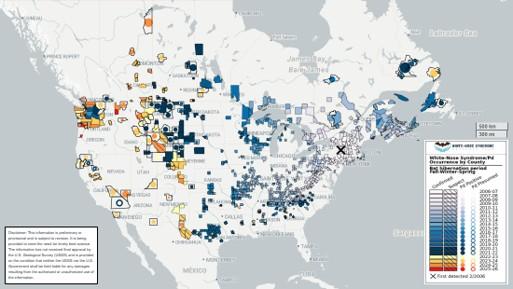
As of April 2026, white-nose syndrome (Confirmed and Suspect) or the fungus (Pd Positive and Pd Presumed) has been reported in 47 states and 10 Provinces. Areas with warm colors mark locations with more recent detection of WNS or Pd. The BFF seeks projects that demonstrate strong alignment with the species, disease status, and environmental conditions of the proposed study area.
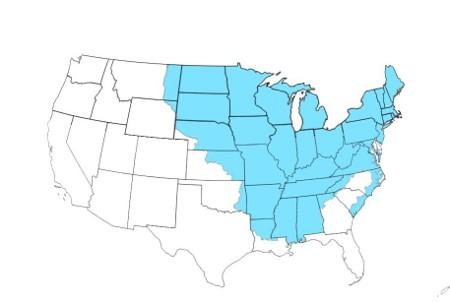
The range of northern long-eared bat extends from southeastern United States into western Canada. The BFF seeks projects in areas where there is evidence of current or imminent impacts to the species, either from WNS or other threats to survival, and anticipated actions to address those threats.
PROGRAM PRIORITIES
The BFF seeks to support management actions and research that address the priorities below. The goal of the program is to support actions that will meaningfully improve survival of hibernating bats in North America. Competitive BFF proposals will aim to implement treatments and management solutions for WNS-affected species to minimize the short- and long-term impacts of the disease and encourage recovery in persisting populations. While the priorities apply to all WNS-susceptible species, additional funds specifically directed toward research, monitoring, and management to benefit northern long-eared bats are available in 2026. Applicants are encouraged to propose cross-disciplinary and innovative approaches to solving challenges associated with management solutions for WNS-affected bat species. Partnerships (e.g., between institutions and agencies, across disciplines) that leverage effort and resources are encouraged. Each proposal must include at least one Principal Investigator or collaborator from a land management agency with jurisdiction over proposed field sites and statements of support from any relevant land management agencies or landowners where fieldwork will be conducted.
In the project narrative, applicants must clearly identify what species is intended to be the primary beneficiary of the proposed activities, a justification of why this species is the predominant recipient of benefits, and a brief statement of implications for secondarily affected species.
All monitoring data generated as a result of awarded funding must be uploaded to the North American Bat Monitoring Program (NABat) for inclusion in status and trends analyses.
- Implement WNS treatments and management strategies that help WNS-affected bat populations to resist, survive, and recover from the impacts of the disease.
The BFF is seeking proposals that employ an adaptive study design for treating or managing the host, pathogen, and/or environment to limit impacts of WNS. Proposed treatments may involve immunological, ecological, molecular, synthetic, biochemical, mechanical, and other strategies that reduce the impacts of WNS on bats. Projects may also seek to eliminate or control reservoirs of Pd in the environment. Safety and feasibility at individual through ecosystem scales will be evaluated for all proposed actions. All applications must describe the benefits, risks, and costs of the proposed management solutions, incorporating non-target effects to organisms and the environment. The BFF seeks proposals that address the following needs:
- In western and central North America, priority activities will benefit hibernating species for which significant disease-related mortality has been documented or is expected as Pd invades and becomes established in the region, including but not limited to western populations of little brown bat (Myotis lucifugus), Yuma bat (M. yumanensis), and cave bat (M. velifer).
- In eastern and central North America, priority projects are those that reduce the impacts of WNS in populations that continue to experience disease-caused mortality, especially northern long-eared bat. Projects that address Pd reservoirs where many bats or multiple species become infected are also valuable.
- The BFF seeks projects that are specifically focused on reducing the impacts of WNS on northern long-eared bats. Competitive proposals will address populations experiencing impacts of WNS and/or locations where northern long-eared bat persists despite a high prevalence of WNS or Pd in the area. Projects may include, but are not limited to the following:
- Creation and management of artificial and natural hibernacula used by extant populations of northern long-eared bat to reduce future disease impacts and improve overwinter survival.
- Reduction of the Pd reservoir in northern long-eared bat hibernacula, including actions involving other WNS-susceptible bat species where they co-occur with northern long-eared bats.
- Improve knowledge of life history information that leads to better conservation and treatment opportunities for WNS-susceptible species.
The BFF is seeking proposals that produce information that improves our ability to reduce impacts of WNS and/or mitigate other threats to hibernating bat species impacted by WNS.
- In all regions, priority projects will protect and maintain important habitats, especially roosting habitat, for WNS-susceptible species during critical life history periods, including hibernation, swarming, and rearing young. The BFF also seeks proposals for research that will lead to improved conservation opportunities for hibernating bat species.
- The BFF invites proposals that lead to improved opportunities for and greater benefits from actions to protect northern long-eared bats. The BFF will seek to support projects that occur in areas where there may be current or imminent impacts to the species, either from WNS or other threats to survival. Projects may include, but are not limited to, the following:
- Conduct comprehensive summer survey and monitoring efforts with the intent to locate and protect persisting populations of northern long-eared bats. Preference will be given to projects that use survey and monitoring techniques (e.g., mist netting, radio telemetry) that build on and confirm previous evidence of species presence (e.g., acoustic records).
- Locate and protect swarming, hibernating, and staging habitat used by northern long-eared bats, especially in areas where there is existing knowledge about persisting summer populations.
- Document and describe behavior of northern long-eared bats in relation to different habitat types and land-use activities, such as forest management and energy development.
- Develop new or improved WNS treatments or tools that increase treatment opportunities through greater scalability, applicability, and durability for population-level benefits.
The BFF is seeking proposals to improve management tools or strategies that help bat populations that have been impacted by WNS to stabilize and recover. Proposed actions may overlap with those identified in priority 1 above. The most competitive projects in this category will produce novel tools or improved delivery of existing tools that deliver population-level benefits to WNS-impacted bat species. Projects may include, but are not limited to the following activities:
- Develop genetic/genomic manipulations, or other molecular technologies, that reduce Pd’s ability to proliferate, survive, spread, and/or infect bats.
- Reduce host susceptibility to WNS using immune-modulating techniques. (Note: applicants seeking to propose work involving the experimental WNS vaccine (BFDi) must contact the USFWS regional WNS coordinator in their region prior to submitting a proposal)
- Implement combinations of treatment agents and/or management strategies to optimize benefits under varying conditions.
PROJECT METRICS
To better gauge progress on individual grants and to ensure greater consistency of project data provided by multiple grants, the Bats for the Future Fund has a list of metrics in Easygrants for full proposal applicants to choose from for future reporting. We ask that applicants select only the most relevant metrics from this list for their project (all possible program metrics are shown in the table below). If you think an applicable metric has not been provided, please contact John Wright (John.Wright@nfwf.org) to discuss acceptable alternatives.
| Project Metric | Additional Guidance |
| BFF - Disease control - # of sites protected | Enter the number of sites being treated. In the notes, elaborate on the number of sites treated and the overall effect on bat populations. |
| BFF – Disease control - # of sites that remain uncontaminated | Enter the number of sites that remain uncontaminated by Pd within your study area as a result of the proposed actions. |
| BFF – Disease control - # of sites with persistent populations | Enter the number of sites that have persistent bat populations as a result of the proposed actions. In the notes, indicate % of these sites out of the total number of sites that received treatment from your project. |
| BFF - Disease control - # individuals protected | Enter the number of individuals receiving treatment directly. In the notes, break out the number of individuals by species being affected/treated. Consider measurement of disease incidence and prevalence to determine success of disease control studies. |
| BFF – Disease control - # of species benefiting | Enter the number of species that directly benefit from your project. In the notes, provide a list of the species affected. |
| BFF – Monitoring - # of acres monitored | Enter the number of acres monitored for presence of species, provide list of the species monitored (e.g. northern long-eared bat). |
| BFF - Monitoring - # sites being monitored | Enter the number of sites monitored. In notes enter the number of sites with hibernacula where northern long-eared bat found (new or continued). |
| BFF – Population - # of sites occupied by species | Enter the number of hibernacula where species found (new or continued), provide list of the species (e.g. northern long-eared bat) |
| BFF – Site Protection – # of sites with enhanced protection | Enter the number of documented northern long-eared bat hibernacula protected using bat-friendly gate (or by other similar means), provide list of directly impacted species (e.g. northern long-eared bat). |
| BFF – Improved management practices - # of acres under improved management | Enter the number of acres treated with a conservation/restoration strategy or best management practice to improve the quality of bat habitat. |
| BFF - Survivorship – Mortality rate | Enter the beginning mortality rate and the predicted change in mortality rate as a result of the proposed actions. In the Notes section describe the % decrease in mortality rate demonstrated by your study and the scale of impact (e.g. site, county, etc.). |
| BFF – Disease control – fungal load rate | Enter the beginning prevalence of Pd rate and the predicted ending prevalence of Pd rate. In the Notes section describe the % decrease in prevalence of Pd rate demonstrated by your study and the scale of impact (e.g. site, county, etc.). |
| BFF - Research - # studies used to inform management | Enter the number of studies completed whose findings lead to direct management recommendations. In the notes section discuss publication goals. |
ELIGIBILITY
Eligible and Ineligible Entities
- Eligible applicants include non-profit 501(c) organizations, U.S. Federal government agencies, state government agencies, local governments, municipal governments, Tribal Governments and Organizations, research and educational institutions, and for-profit entities. For-profit applicants: please note that this is a request for grant proposals, not a procurement of goods and services; see the Budget section below for specific cost considerations.
- Ineligible applicants include unincorporated individuals.
EVALUATION CRITERIA
All proposals will be screened for relevance, accuracy, completeness and compliance with NFWF and funding source policies. Proposals will then be evaluated based on the extent to which they meet the following criteria.
| Conservation Outcomes | Technical Merit | Budget | Partnership and Community Impact |
|
|
|
|
Conservation Outcomes
- Project addresses one or more of the program priorities and aligns with priorities described in this announcement.
- The project leads to likely and sustainable conservation benefit relevant to the priorities selected by the applicant.
- Project involves relevant and appropriate methods and partnerships to ensure success.
- Project has specific, quantifiable performance metrics that measure a direct benefit to species recovery with baselines, targets, and appropriate reporting frequencies to evaluate project progress toward goals.
Technical Merit
- Project is technically sound and feasible, and the proposal sets forth a clear, logical, and achievable work plan/timeline.
- Project engages appropriate technical experts throughout project planning, design, and implementation to ensure activities are technically sound and feasible.
- Project includes a plan for monitoring progress during the proposed project period to track project success and adaptively address new challenges and opportunities as they arise. Proposal notes any pre- and post-performance monitoring necessary and how it may be implemented.
- Project will be maintained to ensure benefits are achieved and sustained over time.
- Project involves activities for which environmental compliance is complete or is achievable for project to succeed.
- Project spatial data submitted to NFWF’s online mapping tool accurately represent the location(s) of conservation activity(ies) at the time of proposal submission. Successful projects will be required to submit improved spatial data for each conservation activity within the period of performance as necessary.
Budget
- Allowable Costs – Costs are allowable, reasonable and budgeted in accordance with NFWF’s Budget Instructions cost categories. Because BFF is supported with Federal funds, projects must be in compliance with OMB Uniform Guidance as applicable.
- Cost-Effectiveness – proposed activities are the most economically efficient way to meet project objectives. Project includes a cost-effective budget that balances performance risk and efficient use of funds. Evaluation of cost-effectiveness includes, but is not limited to, an assessment of effective direct/indirect costs across all categories in the proposed budget according to the type, size and duration of the project and project objectives. Project budgets will be compared to similar projects to ensure proposed costs across all budget categories are reasonable for the activities being performed and the outcomes proposed.
- Matching Contributions – Matching contributions consist of cash, contributed goods and services, volunteer hours, and/or property raised, spent, and acquired for the Project during the Period of Performance. Larger match ratios and matching fund contributions from a diversity of partners are encouraged and will be more competitive during application review. Funds previously awarded by the U.S. Federal Government are not allowable as match.
Partnership and Community Impact
- The applicant engages and works in partnership with local community members, leaders, community-based organizations, private landowners and other relevant stakeholders to develop and implement the proposed project. This ensures long-term sustainability and success of the project, integration into local programs and policies, and community acceptance of proposed restoration actions.
- Partners or communities are enlisted to broaden the sustained impact from the project. Identify any communities impacted, describe outreach and community engagement activities and how those will be monitored and measured.
- Applicants should submit letters of support from community partners and/or collaborators demonstrating their commitment to the project and engagement in project activities as proposed.
OTHER
Ineligible Uses of Grant Funds
- NFWF funds and matching contributions are strictly prohibited from being used for a number of reasons to include, for example, political advocacy, fundraising, lobbying, litigation, terrorist activities, or in violation of the Foreign Corrupt Practices Act. See OMB Uniform Guidance for additional information.
- Equipment: Applicants are encouraged to rent equipment where possible and cost-effective or use matching funds to make those purchases. NFWF acknowledges, however, that some projects may only be completed using NFWF funds to procure equipment. If this applies to your project, please contact the program staff listed in this RFP to discuss options.
- Federal funds and matching contributions may not be used to procure or obtain equipment, services, or systems (including entering into or renewing a contract) that uses telecommunications equipment or services produced by Huawei Technologies Company or ZTE Corporation (or any subsidiary or affiliate of such entities) as a substantial or essential component, or as critical technology of any system. Refer to Public Law 115-232, section 889 for additional information.
- Pursuant to the American Security Drone Act (ASDA), effective December 22, 2025, applicants proposing activities funded in whole or in part with federal funds may not use, operate, or purchase any drone or uncrewed aerial systems (UAS) included on the Covered Foreign Entities (CFE) List. This prohibition applies to both new purchases and continued use of existing UAS, including certain widely used commercial platforms, such as DJI and Autel. Applicants are responsible for ensuring that all proposed and existing UAS used in connection with federally funded activities comply with applicable federal law and are not included on the CFE List. Noncompliance may affect eligibility for funding.
- NFWF funds may not be used to support ongoing efforts to comply with legal requirements, including permit conditions, mitigation and settlement agreements. However, grant funds may be used to support projects that enhance or improve upon existing baseline compliance efforts.
Environmental Services – NFWF funds projects in pursuit of its mission to sustain, restore and enhance the nation's fish, wildlife, plants and habitats for current and future generations. NFWF recognizes that some benefits from projects may be of value with regards to credits on an environmental services market (such as a carbon credit market). NFWF does not participate in, facilitate, or manage an environmental services market nor does NFWF assert any claim on such credits.
Intellectual Property – Intellectual property created using NFWF awards may be copyrighted or otherwise legally protected by award recipients. NFWF may reserve the right to use, publish, and copy materials created under awards, including posting such material on NFWF’s website and featuring it in publications. NFWF may use project metrics and spatial data from awards to estimate societal benefits that result and to report these results to funding partners. These may include but are not limited to: habitat and species response, species connectivity, water quality, water quantity, risk of detrimental events (e.g., wildfire, floods), and carbon accounting (e.g., sequestration, avoided emissions).
Procurement – If the applicant chooses to specifically identify proposed Contractor(s) for Services, an award by NFWF to the applicant does not constitute NFWF’s express written authorization for the applicant to procure such specific services noncompetitively. When procuring goods and services, NFWF award recipients must follow documented procurement procedures which reflect applicable laws and regulations.
Publicity and Acknowledgement of Support – Award recipients will be required to grant NFWF the right and authority to publicize the project and NFWF’s financial support for the grant in press releases, publications and other public communications. Recipients may also be asked by NFWF to provide high-resolution (minimum 300 dpi) photographs depicting the project.
Receiving Award Funds – Award payments are primarily reimbursable. Projects may request funds for reimbursement at any time after completing a signed agreement with NFWF. A request of an advance of funds must be due to an imminent need of expenditure and must detail how the funds will be used and provide justification and a timeline for expected disbursement of these funds. Requests for monthly advances will not be considered.
Regulatory Compliance Requirements – Projects selected for an award will likely include test materials that are subject to regulation by the U.S. Environmental Protection Agency (Federal Insecticide, Fungicide and Rodenticide Act, pesticides), U.S. Health and Human Services, U.S. Food and Drug Administration (Federal Food, Drug and Cosmetic Act, drugs) or the U.S. Department of Agriculture Center for Veterinary Biologics (Virus, Serum and Toxin Act, vaccines). Proposals must demonstrate that the Principal Investigator understands the regulation of their test material and has a plan for meeting regulatory requirements. Some information concerning some regulatory authorities can be found in the publication A Decision Support Tool for Determining Federal Regulatory Authority over Products for Vertebrate Animals.
Projects selected may be subject to requirements under the National Environmental Policy Act, the Endangered Species Act (state and federal), and the National Historic Preservation Act. Documentation of compliance with these regulations must be approved prior to initiating activities that disturb or alter habitat or other features of the project site(s). Applicants should budget sufficient time and resources to obtain the needed approvals. As may be applicable, successful applicants may be required to comply with additional Federal, state or local requirements and obtain all necessary permits and clearances.
Permits – Successful applicants will be required to provide sufficient documentation that the project expects to receive or has received all necessary permits and clearances to comply with any Federal, state or local requirements. Where projects involve work in the waters of the United States, NFWF strongly encourages applicants to conduct a permit pre-application meeting with the Army Corps of Engineers prior to submitting their proposal. In some cases, if a permit pre-application meeting has not been completed, NFWF may require successful applicants to complete such a meeting prior to grant award.
Animal Care - Principal Investigators will be expected to maintain compliance with the Animal Welfare Act and its regulations with satisfactory review and approval of animal activities in research protocols by a USDA-registered and/or PHS-assured Institutional Animal Care and Use Committee. Use of animal subjects must be appropriate for the current state of knowledge. Applicants must provide a clear description of how study animals will be selected and what their final disposition will be. Applicants must justify the need to use terminal sampling if that is the expected outcome.
Spatial Data – Project spatial data submitted to NFWF’s online mapping tool must accurately represent the location(s) of conservation activity(ies) at the time of proposal submission. Successful projects will be required to submit improved spatial data for each conservation activity within the period of performance as necessary.
HOW TO APPLY
All application materials must be submitted online through National Fish and Wildlife
Foundation’s Easygrants system.
- Go to easygrants.nfwf.org to register in our Easygrants online system. New users to the system will be prompted to register before starting the application (if you already are a registered user, use your existing login). Enter your applicant information. Please disable the pop-up blocker on your internet browser prior to beginning the application process.
- Once on your homepage, click the “Apply for Funding” button and select this RFP’s “Funding Opportunity” from the list of options.
- Follow the instructions in Easygrants to complete your application. Once an application has been started, it may be saved and returned to at a later time for completion and submission.
APPLICATION ASSISTANCE
A Tip Sheet is available for quick reference while you are working through your application. This document can be downloaded here.
Additional information to support the application process can be accessed on the NFWF website’s Applicant Information page.
For more information or questions about this RFP, please contact:
John Wright John.Wright@nfwf.org
For issues or assistance with our online Easygrants system, please contact:
Easygrants Helpdesk
Email: Easygrants@nfwf.org
Voicemail: 202-595-2497
Hours: 9:00 am to 5:00 pm ET, Monday-Friday.
Include: your name, proposal ID #, e-mail address, phone number, program you are applying to, and a description of the issue.