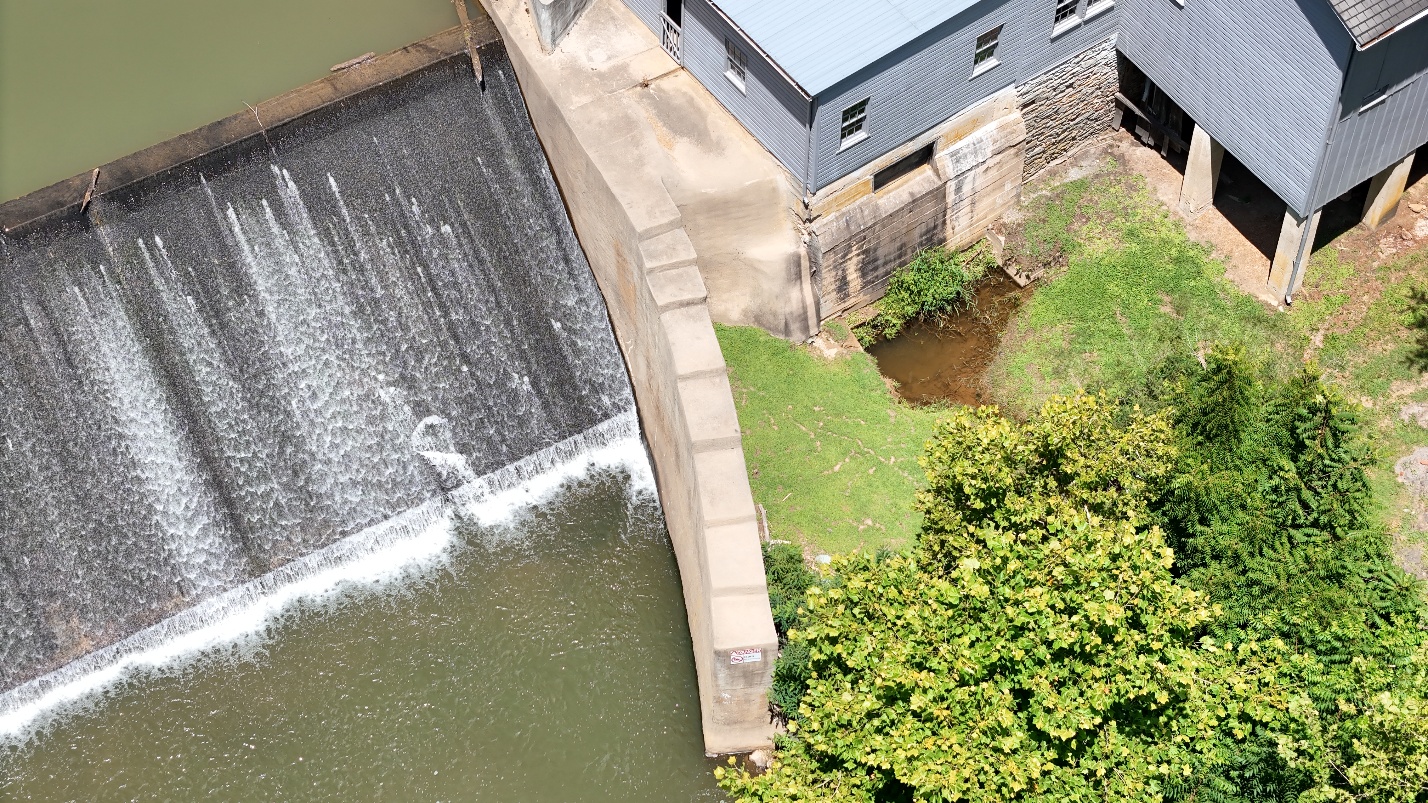
Aerial photo of the dam, before the eel ladder | Photo courtesy of Hartford County, MD
Image
Helping a mysterious and slippery fish return home
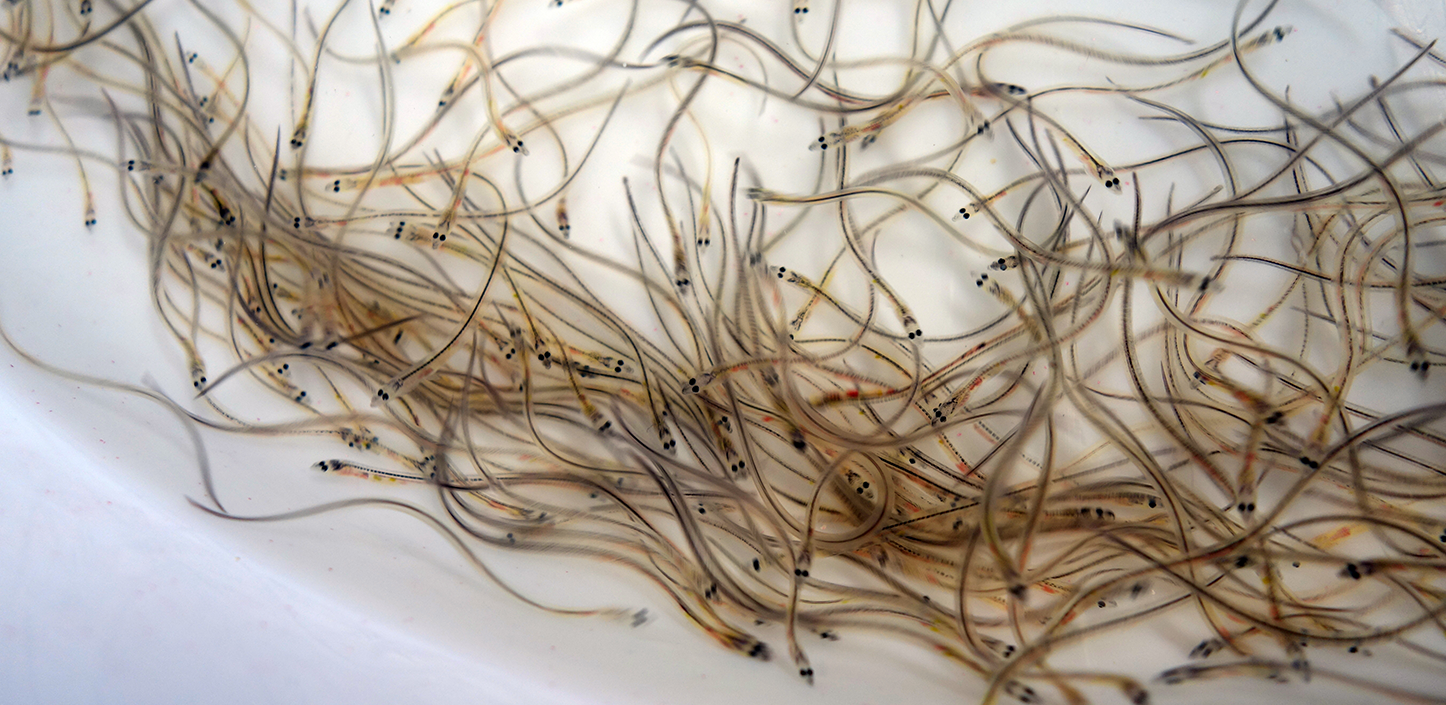
Glass eels
For more than 200 years, a dam in Harford County, Maryland, blocked one of nature’s most fascinating wildlife migrations.
Every spring and summer, young American eels—hatched thousands of miles away in the Sargasso Sea and swept north by ocean currents into the Chesapeake Bay—would reach the base of the dam on Deer Creek and go no further.
Now, a project funded through the National Fish and Wildlife Foundation and U.S. Fish and Wildlife Service’s Chesapeake WILD program is helping these enigmatic fish reclaim some of their historic habitat.
In 2023, NFWF awarded $80,000 to Harford County, Maryland, to design and install an eel ladder at the Eden Mill Dam, which had long prevented young American eels from reaching upstream habitat. The project has helped reopen more than 116 miles of stream habitat for eels while creating a unique hands-on educational opportunity for the local community.
Resembling a covered-up slide angled up out of the water, the eel ladder uses a small flow of water and a textured surface that allows wriggling young eels to safely bypass the obstruction. At the top, they drop through a pipe into a mesh bag suspended in a bucket of water, where park staff and volunteers count, weigh and release them above the dam.
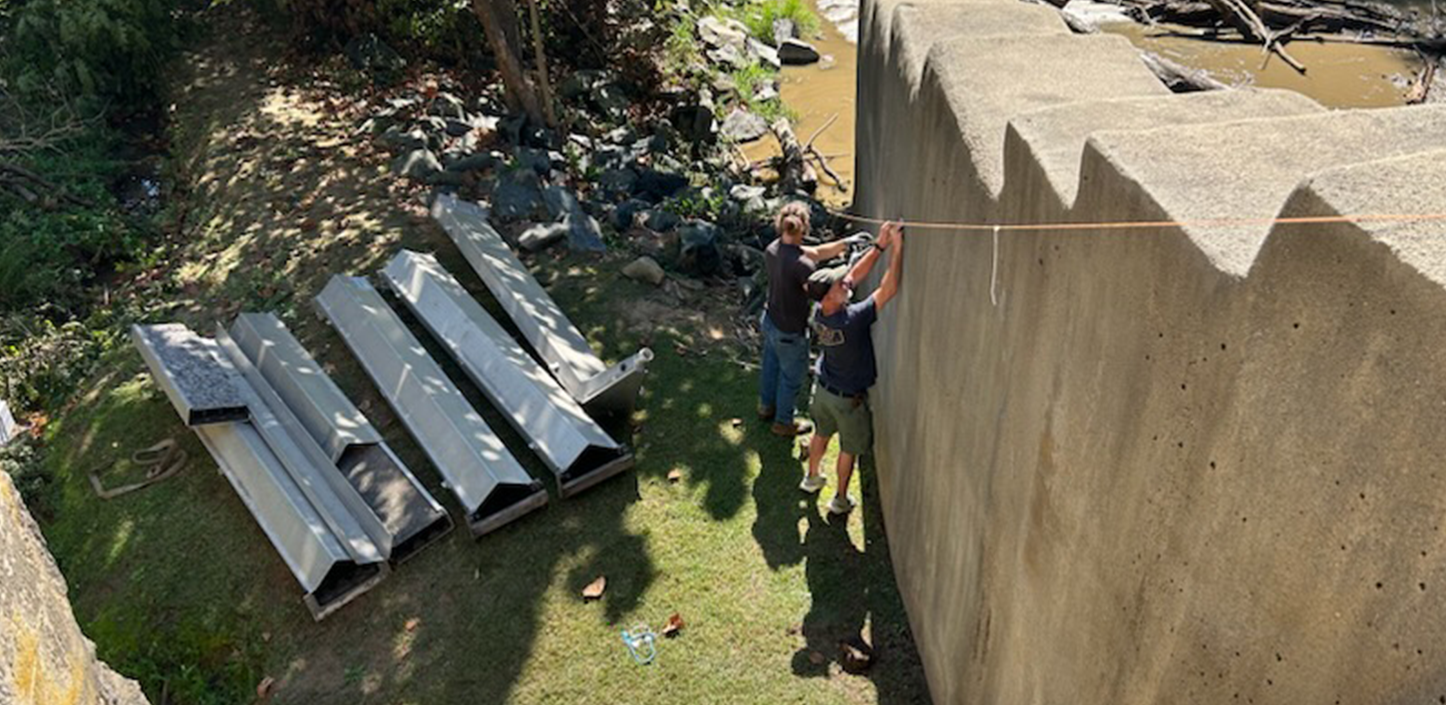
Pre-construction work begins | Photo courtesy of Hartford County, MD
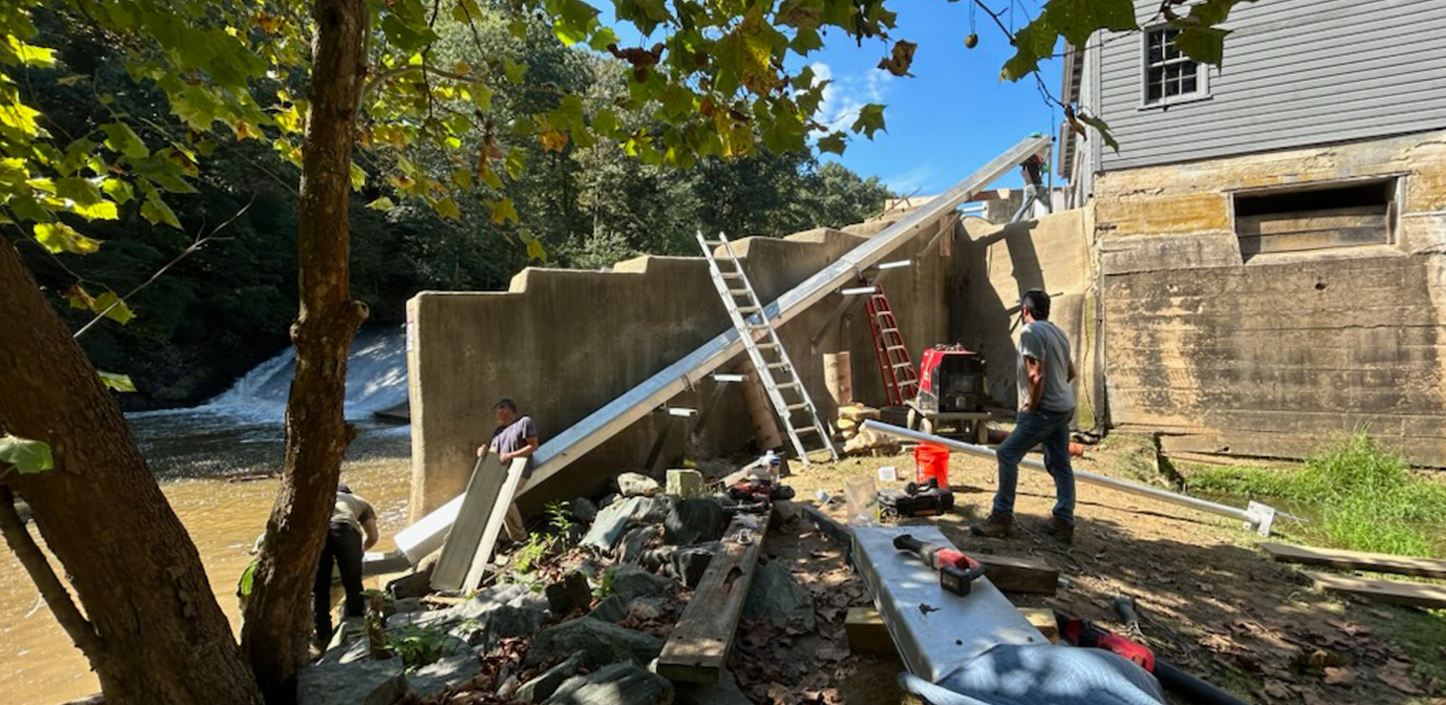
Construction of the eel ladder | Photo courtesy of Hartford County, MD
“We’ve had about 800 [eels] come through this year,” Eden Mill park manager Aimee Dunn told the Baltimore Banner. “They’re slippery like worms and very strong.”
Few native species carry as much mystery, or as much ecological weight, as the American eel. The fish and their relatives, European eels, begin life in the Sargasso Sea, a vast, current-bound expanse of Atlantic Ocean grasses, where scientists only confirmed spawning behavior in 2022. Larvae drift toward the coast, transforming first into slender and transparent juvenile “glass eels.” As they move inland, the eels turn brown and become known as “elvers.” When they reach adult size, another color change leads to yet another name: “yellow eels.” After 10 to 20 years living as freshwater fish, these yellow eels receive some kind of signal — still unknown to science — that triggers an amazing transformation. Their eyes grow larger, they stop eating, and they become “silver eels.” They swim back downstream, out into the Atlantic Ocean and across thousands of miles to gather in the Sargasso Sea, where they spawn and die.
Less mysterious is the American eel’s important and well-established place in the freshwater food web. During different stages of their lives, they serve as both predator and prey, consuming insects, crayfish and small fish while also providing food for larger fish, birds and mammals. But one of their most valuable ecological contributions is their relationship with the eastern elliptio, a native freshwater mussel species that helps filter and improve water quality. Eels host the larvae of the eastern elliptio. As the eels move throughout a watershed, they help distribute mussels to new habitats, supporting healthier streams and rivers.
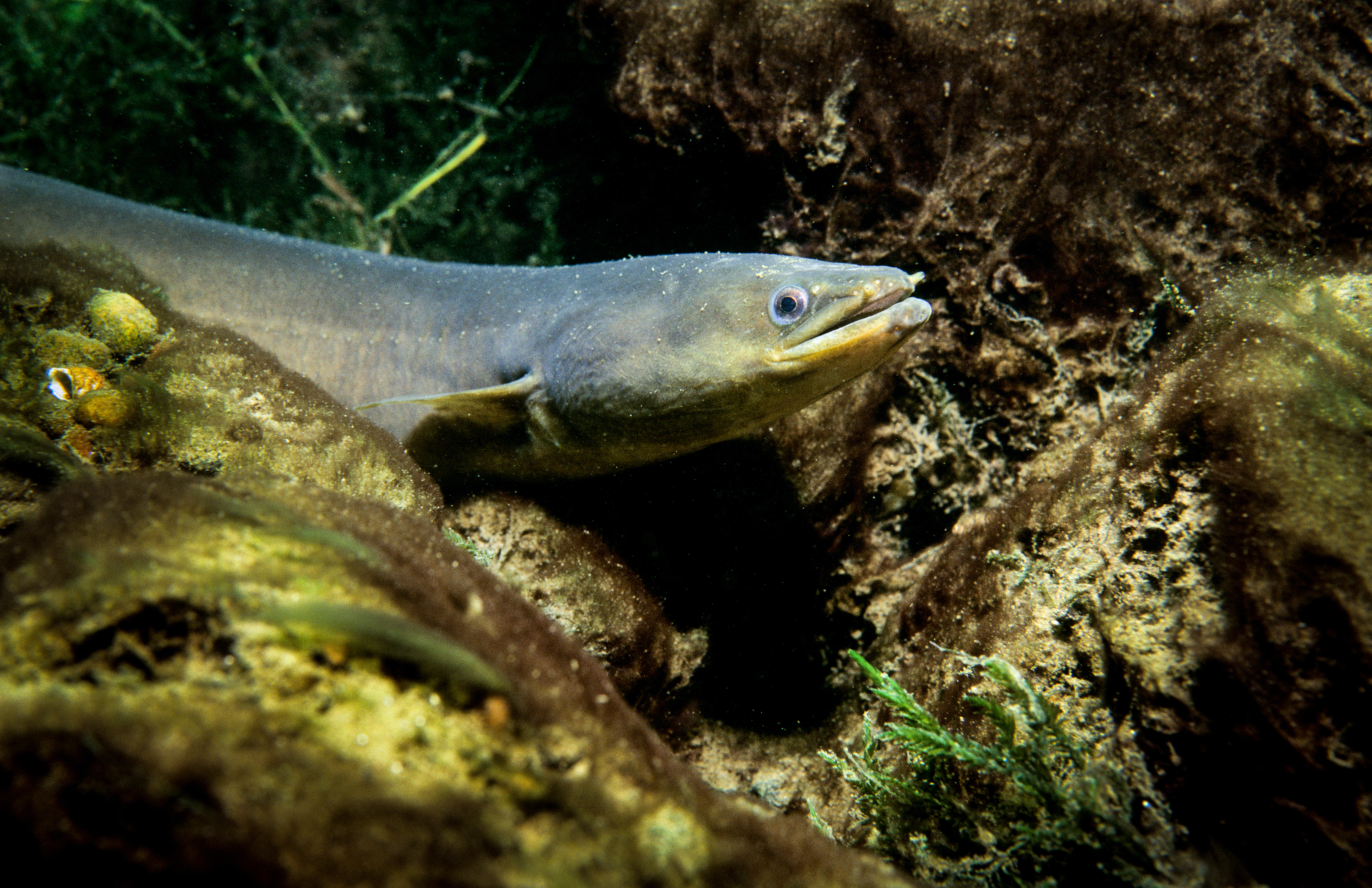
American eel
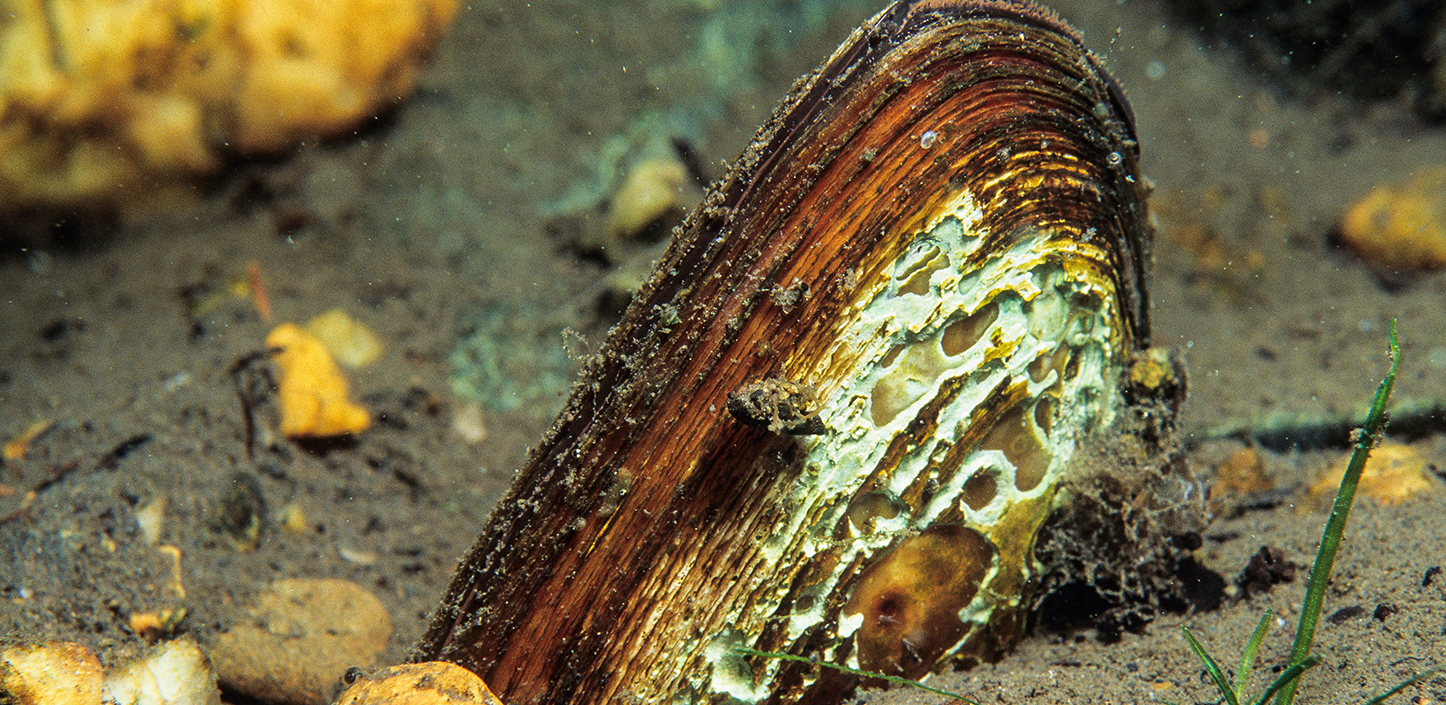
Eastern elliptio mussel
Since the 1970s, American eel populations have declined by as much as 90 percent in some rivers, driven by pollution, habitat loss and barriers that interrupt migration routes. While dam removal can be an effective restoration strategy, not every barrier can be removed. Eel ladders offer another solution, reconnecting rivers while preserving existing infrastructure.
The Eden Mill eel ladder is one of many projects across the Chesapeake Bay watershed supported through the Chesapeake WILD program, which promotes voluntary, community-based efforts to protect and restore the diverse and vital habitats of the Chesapeake Bay and its tributary rivers and streams. Learn more about NFWF’s work in the Chesapeake Bay watershed.