Innovative Nutrient and Sediment Reduction Grants
The Innovative Nutrient and Sediment Reduction Program will catalyze, strengthen and mature regional-scale partnerships based on evidence that collaboratives of this scale are effective mechanisms for achieving and sustaining water quality improvements by inspiring engagement, improving capacity and advancing impact over time.
Partners
The revised Chesapeake Bay Watershed Agreement (Agreement) renews the collective commitments of Chesapeake Bay Program (CBP) partners to advance restoration, conservation and protection of the Chesapeake Bay ecosystem and its watershed through 2040. The Innovative Nutrient and Sediment Reduction Grants program seeks to advance these CBP partnership priorities specifically through strategic investment in established watershed restoration collaboratives to immediately accelerate and scale practice implementation outcomes and to sustain and expand ongoing watershed restoration activities and outcomes over time.
The INSR Grants program most directly supports the revised Agreement’s Clean Water Goal to implement and maintain practices and controls to reduce nitrogen, phosphorus and sediment pollution through accelerated implementation of Agreement signatories’ Chesapeake Bay Watershed Implementation Plans, two-year milestone commitments, and other innovative strategies to achieve and maintain nutrient and sediment reductions.
The Innovative Nutrient and Sediment Reduction Program addresses two main priorities:
PRIORITY 1. Accelerating and Scaling Implementation of Watershed Restoration Practices and Approaches
The primary objective of the INSR Grants program is to accelerate and scale the implementation, maintenance, and sustained performance of watershed restoration practices and approaches that reduce nitrogen, phosphorus, and sediment pollution to the Chesapeake Bay and its local waterways. These practices include both best management practices currently recognized and credited by the CBP partnership for their nutrient and sediment pollution and/or runoff reduction benefits, as well as new and novel technologies and practices, restoration methods, programmatic approaches, financing models, etc. that will further accelerate measurable, cost-effective water quality improvement outcomes.
- Strategy 1: Accelerating implementation of priority upland practices across the agricultural and urban stormwater sectors
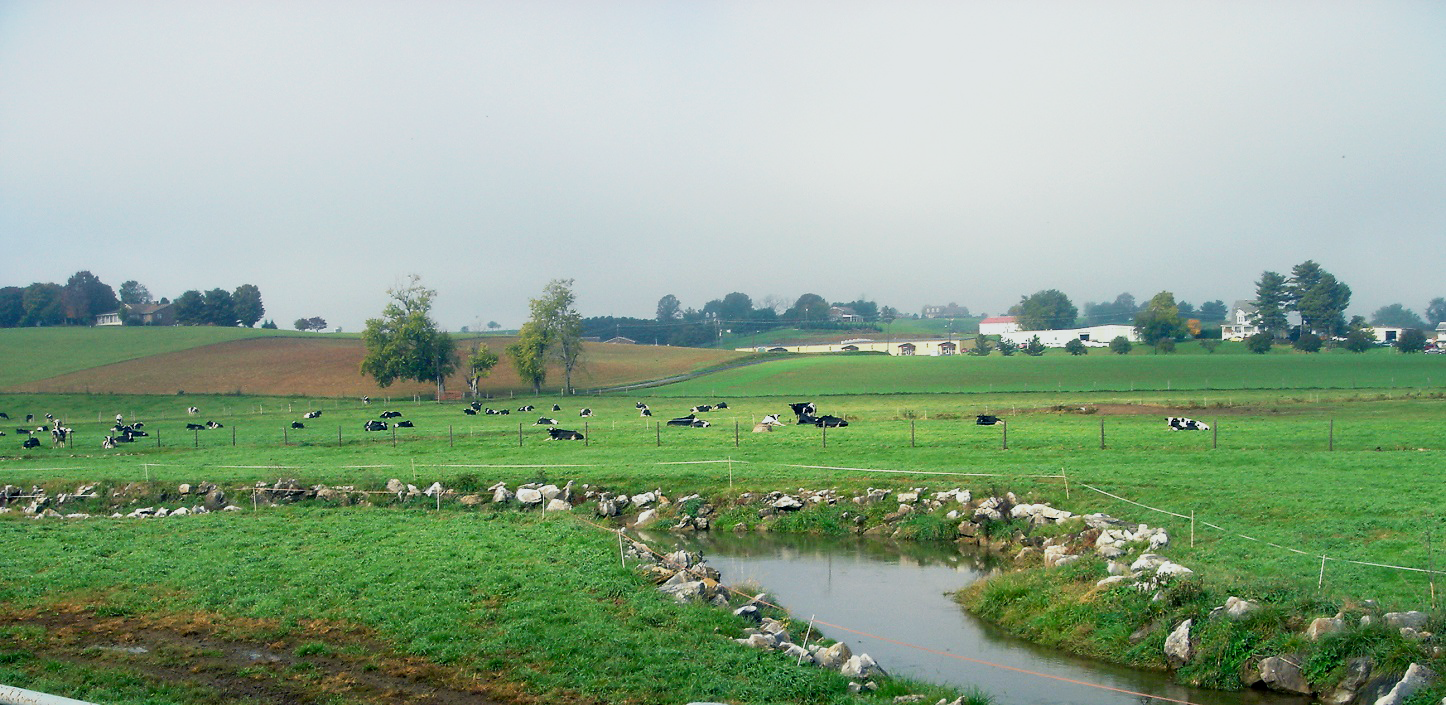
- Strategy 2: Accelerating implementation of riparian forest buffers, livestock exclusion fencing, and supporting practices like stream crossings and off-stream watering
- Strategy 3: Supporting place-based watershed restoration approaches that aggregate implementation efforts in specific catchments or subwatersheds in order to produce more immediate and recognizable water quality benefits to local communities
- Strategy 4: Expanding adoption of watershed restoration practices and approaches that also benefit terrestrial and aquatic habitat and inland and coastal resilience
- Strategy 5: Piloting new or novel nonpoint source pollution and runoff reduction technologies and approaches that will further accelerate cost-effective water quality improvement outcomes at the local and regional scales
PRIORITY 2. Enhancing the Ability of Watershed Restoration Collaboratives to Sustain and Expand Implementation
The INSR Grants program seeks to enhance the ability of established watershed restoration collaboratives to sustain and expand these implementation activities and outcomes over time. An independent evaluation has found that watershed restoration collaboratives, which leverage multiple organizations and individuals to jointly pursue shared watershed restoration objectives, are proven mechanisms for accelerating and scaling the implementation of watershed restoration practices and outcomes at the local, regional, and Bay-watershed scales.
All eligible projects must occur wholly within the Chesapeake Bay watershed and projects located within NFWF's Targeted Rivers and Watersheds will be prioritized. These locations were identified by NFWF as having significant opportunities for shared water quality improvement, habitat restoration, and species recovery outcomes.
| 2026 INSR Grant Slate | Download the PDF | |
| 2025 INSR Grant Slate | Download the PDF | |
| 2024 INSR Grant Slate | Download the PDF | |
| INSR 2023 Grant Slate | Download the PDF | |
| 2023 INSR Grant Slate | Download the PDF | |
| 2022 INSR Grant Slate | Download the PDF | |
| 2021 INSR Grant Slate | Download the PDF | |
| 2020 Chesapeake Bay Grant Slate | Download the PDF | |
| 2019 Chesapeake Bay Grant Slate | Download the PDF |
Program Director, Chesapeake Programs
Program Manager, Chesapeake Programs
Coordinator, Regional Programs