Chesapeake Bay Innovative Nutrient and Sediment Reduction Grants 2026 Request for Pre-Proposals
RFP GUIDANCE
NFWF is committed to operating in full compliance with all applicable laws, regulations, and Executive Orders. We continuously monitor legal and regulatory developments to ensure our policies, procedures, and operations align with current federal directives. We encourage all applicants to do the same.
The ability and extent to which NFWF is able to make awards is contingent upon receipt of funds from federal agencies and/or other funding partners. Funding decisions will be made based on the level of funding and timing of when it is received by NFWF.
TIMELINE
Dates are subject to change. Please check the Program page of the NFWF website for the most current dates and information (http://www.nfwf.org/chesapeake).
| Pre-Proposal Webinar (Register here) | January 7, 2026, 10:00AM ET |
| Evaluation Briefing & Workshop (Register here) | January 9, 2026, 10:00AM ET |
| Pre-Proposal Due Date | February 12, 2026, 12:00PM ET |
| Full Proposal Invitations | March 2026 |
| Full Proposal Due Date | May 2026 |
| Awards Announced | August 2026 |
Prospective applicants are strongly encouraged to attend a pre-proposal applicant webinar detailing this Request for Pre-Proposals at 10:00 AM on Wednesday, January 7, and must register in advance here in order to participate. For those unable to attend, a recording of the webinar will be posted to the Innovative Nutrient and Sediment Reduction Grants program page by Friday, January 9.
Additionally, prospective applicants are also encouraged to participate in a separate, virtual briefing and workshop on a recently completed independent evaluation of the INSR Grants program scheduled for January 9, from 11:00 AM to 1:00 PM. This briefing and workshop will provide important framing and context on the INSR Grants program’s focus on collaborative models for watershed restoration, as well as opportunities to discuss and workshop collaborative development needs and opportunities consistent with this Request for Pre-Proposals. Please register here.
All applicants must complete a pre-proposal consultation with NFWF staff prior to January 29, 2026. Consultations can be scheduled here. Prospective applicants are also encouraged to contact NFWF’s contracted field liaisons to discuss their proposed project prior to consulting with NFWF staff.
OVERVIEW
The National Fish and Wildlife Foundation (NFWF), in partnership with the U.S. Environmental Protection Agency (EPA) and the federal-state Chesapeake Bay Program (CBP) partnership, is soliciting pre-proposals through the Innovative Nutrient and Sediment Reduction (INSR) Grants program to improve water quality and reduce nutrient and sediment pollution to the Chesapeake Bay and its tributary rivers and streams. Major funding for the INSR Grants program is provided by EPA, with other important contributions from Altria Group, the U.S. Department of Agriculture Natural Resources Conservation Service (NRCS), and the U.S. Forest Service.
GRANT AWARD INFORMATION
NFWF anticipates awarding grant agreements of up to five years and up to $2 million each through the 2026 INSR Grants program. Awards will be made to eligible entities representing, acting on behalf of, or in support of one or more qualifying established watershed restoration collaboratives (see ELIGIBILITY below). All projects are expected to begin no later than March 31, 2027 and end no later than December 31, 2031.
The Request for Pre-Proposals is aimed at securing ambitious and aspirational five-year collaborative plans to accelerate on-the-ground watershed restoration and collaborative capacity building outcomes consistent with INSR Grants program priorities (see PROGRAM PRIORITIES below). Applicants are encouraged to reference NFWF’s Chesapeake Bay Business Plan and link NFWF Business Plan strategies when possible. The most competitive pre-proposals will then be invited to submit more detailed full proposals outlining proposed budgets, not to exceed $1 million, and associated work plans for up to the first three years of these five-year collaborative plans.
If selected for funding, NFWF will provide a partial award of up to $1 million in late 2026 for an initial period of performance up to three years. Awardees will then be eligible, beginning in 2028, for award increases, extended periods of performance, and scope adjustments to complete these five-year collaborative plans. This additional funding is not guaranteed and ongoing programmatic and financial performance, adaptive management needs, and available funding will all be considered in determining potential award increases. In general, awarded funds will made available on a reimbursable basis.
Non-federal match, including both cash and in-kind, is encouraged. NFWF expects that the most competitive pre-proposals will have a plan to secure non-federal match in amounts equal to or greater than the five-year funding request. To qualify, matching funds must be expended during the proposed period of performance.
In addition to non-federal matching funds, applicants are also strongly encouraged to describe federal partner contributions in the match section of their application. These contributions will not count toward any non-federal match expectations described above but will assist in understanding and evaluating the resources and partners contributing to the overall project.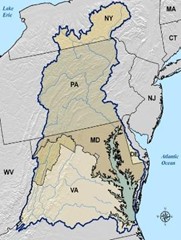
GEOGRAPHIC FOCUS
All projects must occur within the Chesapeake Bay watershed.
PROGRAM PRIORITIES
The revised Chesapeake Bay Watershed Agreement (Agreement) renews the collective commitments of CBP partners to advance restoration, conservation and protection of the Chesapeake Bay ecosystem and its watershed through 2040. The INSR Grants program is a critical element of CBP’s overall financial support to advance those commitments, particularly in supporting innovative, sustainable and cost-effective approaches that dramatically reduce nutrient and sediment pollution to the Chesapeake Bay and its local waterways.
The INSR Grants program most directly supports the revised Agreement’s Clean Water Goal to implement and maintain practices and controls to reduce nitrogen, phosphorus and sediment pollution through accelerate implementation of Agreement signatories’ Chesapeake Bay Watershed Implementation Plans, two-year milestone commitments, and other innovative strategies to achieve and maintain nutrient and sediment reductions.
While the primary focus of the INSR Grants program is achievement of the Agreement’s Clean Water Goal, proposals that meaningfully address additional Agreement goals, outcomes, or targets are strongly encouraged.
The INSR Grants program seeks to advance these CBP partnership priorities specifically through strategic investment in established watershed restoration collaboratives to immediately accelerate and scale practice implementation outcomes and to sustain and expand ongoing watershed restoration activities and outcomes over time.
All projects will accordingly be expected to address both INSR Grants program priorities.
PRIORITY 1. Accelerating and Scaling Implementation of Watershed Restoration Practices and Approaches
The primary objective of the INSR Grants program is to accelerate and scale the implementation, maintenance, and sustained performance of watershed restoration practices and approaches that reduce nitrogen, phosphorus, and sediment pollution to the Chesapeake Bay and its local waterways. The INSR Grants program is strategically focused on achieving this objective through the shared efforts of watershed restoration collaboratives to accelerate and scale on-the-ground implementation outcomes over time (see PRIORITY 2).
These practices include both best management practices currently recognized and credited by the CBP partnership for their nutrient and sediment pollution and/or runoff reduction benefits, as well as new and novel technologies and practices, restoration methods, programmatic approaches, financing models, etc. that will further accelerate measurable, cost-effective water quality improvement outcomes.
In particular, the INSR Grants program seeks to advance the following strategies:
Strategy 1: Accelerating implementation of priority upland practices across the agricultural and urban stormwater sectors, including:
- Agricultural nutrient and manure management
- Agricultural conservation practices that improve soil health, infiltration, and drought resilience across rural landscapes (cover crops, tillage management, pasture and grazing management practices, etc.)
- Tree planting, agroforestry (e.g., silvopasture, alley cropping), and urban tree canopy; and
- Stormwater management practices that individually and in aggregate maximize volumetric stormwater runoff reduction outcomes
Strategy 2: Accelerating implementation of riparian forest buffers, livestock exclusion fencing, and supporting practices like stream crossings and off-stream watering
Strategy 3: Supporting place-based watershed restoration approaches that aggregate implementation efforts in specific catchments or subwatersheds in order to produce more immediate and recognizable water quality benefits to local communities
Strategy 4: Expanding adoption of watershed restoration practices and approaches that also benefit terrestrial and aquatic habitat and inland and coastal resilience
Strategy 5: Piloting new or novel nonpoint source pollution and runoff reduction technologies and approaches that will further accelerate cost-effective water quality improvement outcomes at the local and regional scales
The INSR Grants program further seeks to advance these implementation outcomes through the development, testing, and transfer of innovative methods and approaches. NFWF does not maintain a specific definition or standard of innovation for the purposes of the INSR Grants program but instead focuses on supporting innovation broadly, including but not limited to programmatic, financing, collaborative, technological innovations.
PRIORITY 2. Enhancing the Ability of Watershed Restoration Collaboratives to Sustain and Expand Implementation
In addition to direct investments in accelerated implementation (see PRIORITY 1), the INSR Grants program also seeks to enhance the ability of established watershed restoration collaboratives to sustain and expand these implementation activities and outcomes over time.
Independent evaluation has found that watershed restoration collaboratives, which leverage multiple organizations and individuals to jointly pursue shared watershed restoration objectives, are proven mechanisms for accelerating and scaling the implementation of watershed restoration practices and outcomes at the local, regional, and Bay-watershed scales.
These collaboratives extend well beyond more transactional, project-scale partnerships and instead focus on longer-term commitments among parties towards shared purposes related to watershed restoration. They can take many forms, ranging from relatively loose and informal working relationships among organizations or individuals, to more structured and formalized networks and multi-party organizations. Often, more structured and formalized collaboratives demonstrate the greatest potential and proven impact for accelerating on-the-ground watershed restoration activities and outcomes over time.
For the purposes of the INSR Grants Program, watershed restoration collaboratives include partnerships, networks, alliances, coalitions, consortia, etc. composed of multiple organizations and entities that maintain and collectively contribute toward a shared purpose or commitment to collaboratively pursue specific on-the-ground watershed restoration activities and outcomes over time.
In order to qualify as an established collaborative for the INSR Grants program, this shared purpose or commitment must be well-documented through some form of written collaborative agreement or arrangement among participating partners. Examples include but are not limited to shared mission or vision statements; shared strategic plans, common agendas, workplans, or other collaborative roadmaps; and charters, cooperative agreements, Memoranda of Understanding, etc.
The INSR Grants program specifically seeks to enhance the ability of these collaboratives to sustain and expand implementation efforts through targeted investments in the following collaborative needs:
- Coordination capacity: Backbone and administrative staff or contractors who provide facilitation, meeting management, communications, progress tracking and measurement, collective administrative needs, and more.
- Shared purpose and goals: Agreements (e.g., MOUs, charters, other legal agreements) that outline and codify a partnership’s collective vision, purpose, and desired impacts.
- Shared strategy and priorities: Strategic plans and/or roadmaps for the collective vision, goals, work plans, actions, and activities that provide a shared understanding of partners’ roles, resources, and capacities.
- Collaborative practices, skills, and tools: Training, education, and other methods to build key collaborative leadership abilities and culture.
- Systems and infrastructure: Communications, reporting, and data-sharing systems; intra-collaborative resources; facilities and equipment; and more.
- Governance and decision-making structures: Collaborative organization (e.g., leadership teams, steering committees, working groups) and associated decision-making processes that steer its vision and support accountability.
While the INSR Grants program seeks to invest in more established watershed restoration collaboratives, as described above, NFWF encourages prospective applicants representing or acting on behalf of more nascent or emerging collaboratives to consult with NFWF staff on potential eligibility for the INSR Grants program. Additionally, NFWF encourages those seeking funding to develop or establish new collaboratives to consider applying through NFWF’s forthcoming Request for Proposals for the Small Watershed Grants program and Chesapeake WILD Grants program.
PROJECT METRICS
Pre-proposals will be required to narratively describe proposed quantitative implementation outcomes over the project period, focusing on aggregate measures of practice implementation (e.g., acres or miles of specific practices implemented) and estimates of associated reductions in annual pollutant loading and/or runoff volume.
In describing proposed implementation outcomes, pre-proposals should distinguish wherever necessary between:
- Direct outcomes, or those outcomes directly financed through NFWF grant funding and/or proposed match or leverage, or otherwise directly attributable to NFWF grant funding; and
- Ancillary outcomes, or those outcomes not directly financed by NFWF or proposed match or leverage and representing more induced, inferred, or otherwise prospective outcomes anticipated from the project, broader efforts of collaborative networks, etc.
NFWF expects direct implementation outcomes to be tracked at the individual practice level (e.g., utilizing the FieldDoc platform) with information on the type, location, extent, and significant co-funders each practice, while ancillary outcomes may be tracked and assessed through other methods and approaches.
Beyond measures of practice implementation and associated reductions in pollutant loading and runoff volume, NFWF ultimately seeks to accelerate measurable improvements for meaningful indicators of water quality, aquatic life, and human health in local tributary rivers and streams across the Bay watershed. These include indicators used to designate and assess attainment of water quality standards, particularly related to aquatic life and human health, as well as other indicators developed by local partners and communities to produce, measure, and communicate more localized values and priorities related to clean rivers and streams.
Collaborative networks that have developed their own indicators and measures of impact or success, including more localized indicators of water quality and any other environmental, economic, or social indicators relevant to the value and priorities of collaborative stakeholders, are also strongly encouraged to describe these indicators in their pre-proposals.
Invited full proposals will receive further guidance on developing more detailed plans and approaches for tracking, measuring, and reporting implementation outcomes from the proposed project, as well as aligning proposed activities with appropriate, required metrics in NFWF’s grants management systems.
ELIGIBILITY
Eligible applicants for the INSR Grants program include non-profit 501(c) organizations, state government agencies, local and municipal governments, Tribal governments and organizations, and educational institutions acting on behalf of one or more qualifying established watershed restoration collaboratives (see pg. 5).
U.S. federal government agencies, businesses, unincorporated individuals, and international organizations are not eligible for the INSR Grants program.
EVALUATION CRITERIA
All pre-proposals will be screened for relevance, accuracy, completeness, and compliance with NFWF and funding source policies. Proposals will then be evaluated based on the extent to which they meet the following criteria:
Evaluation Criterion #1 – Conservation Outcomes
- Accelerated Implementation: Proposal meaningfully accelerates implementation, maintenance, and sustained performance of watershed restoration practices and approaches that reduce nitrogen, phosphorus, and sediment pollution to the Chesapeake Bay and its local waterways.
- Collaborative Purpose: Proposed collaborative networks maintain and collectively contribute to a compelling, well-documented shared purpose or commitment to pursue specific on-the-ground watershed restoration activities and outcomes over time.
- Enhanced Collaborative Ability: Proposal meaningfully enhances the ability of watershed restoration collaboratives to immediately accelerate implementation outcomes and to sustain and expand ongoing watershed restoration activities and outcomes over time.
Evaluation Criterion #2 – Partnership and Community Impact
- The applicant organization partners and engages collaboratively with local community members, leaders, community-based organizations, and other relevant stakeholders to develop and implement the proposed project. This ensures long-term sustainability and success of the project, integration into local programs and policies, and community acceptance of proposed restoration actions.
- Partners or communities are enlisted to broaden the sustained impact of the project.
- Proposal describes the community characteristics of the project area, identifies any communities impacted, and describes outreach and community engagement activities and how those will be monitored and measured.
- Proposal uses data to support descriptions and submits letters of support from community partners and/or collaborators demonstrating their commitment to the project and engagement in project activities as proposed.
Evaluation Criterion #3 – Budget / Cost-Effectiveness
- Costs are allowable, reasonable and budgeted in accordance with NFWF’s Budget Instructions cost categories. Federally-funded projects must be in compliance with OMB Uniform Guidance as applicable. A complete budget should include budget narratives to provide justifications for costs.
- Amount requested is proportional to expected outcomes.
- Project includes a cost-effective budget that balances performance risk and efficient use of funds. Cost-effectiveness analysis identifies the most efficient way to meet project objectives. Cost-effectiveness evaluation includes, but is not limited to, an assessment of effective direct/indirect costs across all categories in the proposed budget according to the type, size and duration of project and project objectives. Project budgets will be compared to similar projects to ensure proposed costs across all budget categories are reasonable for the activities being performed and the outcomes proposed.
- Budget clearly indicates the degree of partnership and collaboration in conducting the proposed work, including through passthrough funding for project partners, stakeholders, and community members, as appropriate.
Evaluation Criterion #4 – Technical
- Project is sound and feasible, and the proposal sets forth a clear, logical, and achievable work plan, milestones, and timeline.
- Project engages appropriate technical experts throughout project planning, design and implementation to ensure activities are technically sound and feasible.
- Project spatial data submitted to NFWF’s online mapping tool accurately represents the location(s) of conservation activity(ies) at the time of proposal submission. Successful projects will be required to submit improved spatial data for each conservation activity within the period of performance as necessary.
- Proposal demonstrates an understanding of necessary permitting and environmental compliance requirements and the ability to obtain necessary approvals consistent with the proposed work plan and timeline.
- Applicant organization has demonstrated an ability to manage and implement similar projects on time and within budget.
OTHER CONSIDERATIONS
Ineligible Uses of Grant Funds
- Equipment: Applicants are encouraged to rent equipment where possible and cost-effective or use matching funds to make those purchases. NFWF acknowledges, however, that some projects may only be completed using NFWF funds to procure equipment. If this applies to your project, please contact the program staff listed in this RFP to discuss options.
- Federal funds and matching contributions may not be used to procure or obtain equipment, services, or systems (including entering into or renewing a contract) that uses telecommunications equipment or services produced by Huawei Technologies Company or ZTE Corporation (or any subsidiary or affiliate of such entities) as a substantial or essential component, or as critical technology of any system. Refer to Public Law 115-232, section 889 for additional information.
- NFWF funds and matching contributions are strictly prohibited from being used for a number of reasons to include, for example, political advocacy, fundraising, lobbying, litigation, terrorist activities, or in violation of the Foreign Corrupt Practices Act. See OMB Uniform Guidance for additional information.
- NFWF funds may not be used to support ongoing efforts to comply with legal requirements, including permit conditions, mitigation and settlement agreements. However, grant funds may be used to support projects that enhance or improve upon existing baseline compliance efforts.
NRCS Funding and Coordination – In order to qualify for potential NRCS funding under this solicitation, applicants should provide technical assistance to interested farmers, ranchers, and private forestland owners to develop management plans, design and implement conservation practices, share their experiences and lessons learned, and participate in Farm Bill programs, especially the Environmental Quality Incentives Program (EQIP) and Conservation Stewardship Program (CSP). A particular emphasis should be placed on promoting, designing, and implementing conservation practices that improve soil health, support grazing system resiliency, restore wetlands, develop perennial wildlife habitat, improve nutrient management, and enhance forest health.
For pre-proposals focused on the agricultural sector, applicants are encouraged to ensure the project aligns with NRCS goals, priorities, and capacity needs by conferring with the NRCS State Conservationist and their staff in the state in which your project is located. A list of NRCS contacts can be found here.
Environmental Services – NFWF funds projects in pursuit of its mission to sustain, restore and enhance the nation's fish, wildlife, plants and habitats for current and future generations. NFWF recognizes that some benefits from projects may be of value with regards to credits on an environmental services market (such as a carbon credit market). NFWF does not participate in, facilitate, or manage an environmental services market nor does NFWF assert any claim on such credits.
Intellectual Property – Intellectual property created using NFWF awards may be copyrighted or otherwise legally protected by award recipients. NFWF may reserve the right to use, publish, and copy materials created under awards, including posting such material on NFWF’s website and featuring it in publications. NFWF may use project metrics and spatial data from awards to estimate community benefits that result and to report these results to funding partners. These may include but are not limited to: habitat and species response, species connectivity, water quality, water quantity, risk of detrimental events (e.g., wildfire, floods), and carbon accounting (e.g., sequestration, avoided emissions).
Procurement – If the applicant chooses to specifically identify proposed Contractor(s) for Services, an award by NFWF to the applicant does not constitute NFWF’s express written authorization for the applicant to procure such specific services noncompetitively. When procuring goods and services, NFWF recipients must follow documented procurement procedures which reflect applicable laws and regulations.
Publicity and Acknowledgement of Support – Award recipients will be required to grant NFWF the right and authority to publicize the project and NFWF’s financial support for the grant in press releases, publications and other public communications. Recipients may also be asked by NFWF to provide high-resolution (minimum 300 dpi) photographs depicting the project.
Receiving Award Funds – Award payments are primarily reimbursable. Projects may request funds for reimbursement at any time after completing a signed agreement with NFWF. A request of advance funds must be due to an imminent need of expenditure and must detail how the funds will be used and provide justification and a timeline for expected disbursement of these funds.
Compliance Requirements – Projects selected may be subject to requirements under the National Environmental Policy Act, Endangered Species Act (state and federal), and National Historic Preservation Act. Documentation of compliance with these regulations must be approved prior to initiating activities that disturb or alter habitat or other features of the project site(s). Applicants should budget time and resources to obtain the needed approvals. As may be applicable, successful applicants may be required to comply with additional Federal, state, or local requirements and obtain all necessary permits and clearances.
Quality Assurance – If a project involves monitoring, data collection or data use, grantees will be asked to prepare and submit quality assurance documentation. This includes any data collection activities described in the proposal as provided by match and partner activities. Examples of data collection or use which requires a Quality Assurance Project Plan (QAPP):
- New data collection.
- Existing data use (a new use for data collected for a different purpose, whether by the same or different groups).
- Data collection and analysis associated with development or design of plans and projects.
- Water or other environmental monitoring.
- Model development or use, etc.
- Citizen or community based scientific data collection, monitoring, etc.
Applicants should budget time and resources to complete this task. No data collection or use may begin until a QAPP is approved and on file. Reimbursement for project activities, including non-data collection activities, may be delayed until quality assurance compliance requirements are complete. Plan to submit the draft QAPP to NFWF within three months of award. The timeline for receiving review feedback and comments and subsequent submittal for EPA approval is dependent upon the quality of the draft QAPP submission and may involve several iterations. General assistance will be available to grantees to help with scoping and review of draft QAPPs. For more information, follow the link to EPA QA and CBSF Quality Assurance Project Plan Guidance. Please contact Tori Sullens (tori.sullens@nfwf.org) if you have any questions about whether your project would require a QAPP. Applicants interested in details of NFWF’s quality assurance approach can visit our “Tools for Current Grantees” webpage.
Permits – Successful applicants will be required to provide sufficient documentation that the project expects to receive or has received all necessary permits and clearances to comply with any Federal, state or local requirements. Where projects involve work in the waters of the United States, NFWF strongly encourages applicants to conduct a permit pre-application meeting with the Army Corps of Engineers prior to submitting their proposal. In some cases, if a permit pre-application meeting has not been completed, NFWF may require successful applicants to complete such a meeting prior to grant award.
Practice Specifications – Unless otherwise noted, all water quality improvement practices implemented must conform to established and recognized standards and practice specifications (e.g., NRCS practice standards, state stormwater manuals and retrofit guidance, approved CBP BMP Expert Panel reports). Applicants must note where proposed practices will deviate from established standards and provide reasonable justification for why an alternative is necessary.
Monitoring – NFWF may implement independent monitoring efforts in the future to measure the environmental outcomes from projects funded under this solicitation. Award recipients may be asked to facilitate granting of access to project sites for NFWF or its designees for future environmental monitoring purposes.
HOW TO APPLY
All application materials must be submitted online through the National Fish and Wildlife Foundation’s Easygrants system.
- Go to https://easygrants.nfwf.org to register in our Easygrants online system. New users to the system will be prompted to register before starting the application (if you already are a registered user, use your existing login). Enter your applicant information. Please disable the pop-up blocker on your internet browser prior to beginning the application process.
- Once on your homepage, click the “Apply for Funding” button, and select this RFP’s “Funding Opportunity” from the list of options.
- Follow the instructions in Easygrants to complete your application. Once an application has been started, it may be saved and returned to later for completion and submission.
APPLICATION ASSISTANCE
A Tip Sheet is available for quick reference while you are working through your application. This document can be downloaded here. Additional information to support the application process can be accessed on the NFWF website’s Applicant Information page. For more information or questions about this RFP, please contact Jake Reilly (jake.reilly@nfwf.org) or Tori Sullens (tori.sullens@nfwf.org).
NFWF also offers on-demand, field-based project and partnership development support for the Chesapeake Bay Stewardship Fund through the services of contacted field liaisons who provide broad geographic coverage across the Bay region and decades of watershed restoration experience and expertise. Applicants may also contact these field liaisons using the information below to discuss potential projects:
| Liaison Contact | Phone | Primary Focus | |
|---|---|---|---|
| Kristen Saacke Blunk | kristen@headwaters-llc.org | (814) 360-9766 | Watershed-, stream-, and wetland restoration and protection, land protection |
| Sarah Clark | sarah@icl.org | (240) 472-1772 | Collaboration and partnership development |
| Kristen Hughes Evans | kristen@susches.org | (804) 554-3403 | Agriculture, collaborative project development |
| David Hirschman | dave@hirschmanwater.com | (434) 409-0993 | Stormwater, green infrastructure, stream corridor restoration |
| Katie Ombalski | katie@woodswaters.com | (814) 574-7281 | Watershed restoration, agriculture, forest and aquatic habitat restoration, and land conservation |
| Mariah Davis | davisstrategies1@gmail.com | (757) 291-8785 | Community engagement, urban and suburban stormwater, urban and suburban agriculture |
| Bryan Hofmann | bryan.hofmann@riverfriends.org | (540) 693-0443 | Green infrastructure, forestry, living shorelines, stream restoration, education, collaborative project development |